


Act I
The Expedition
What happens inside a single run.
The promise · The first journey · Your first companion · The feel of combat · The dungeon journey · A build for this run
A first meeting
Nout and Zephyr. Every expedition begins with a little trust.
Plate 01
A world worth returning to
An arrival at a sky-port connects the traveler, companion, airship and distant places waiting to be explored.
- 1Companion at heel height, walking in step. The partnership reads before anyone speaks.
- 2The winged-star banner marks a friendly port. The same colours hang in every harbor.
- 3The destination is always in view. Distant ruins pull the eye up and out.
- 4Cream sails, blue stripe, gold emblem: the silhouette players learn to call home.
Chapter 01 The promise
You can always come back and make progress here.
Galespun is a single-player dungeon adventure set among floating islands, extraordinary companions and ports with lives of their own. At its heart is a particular kind of anticipation: the next expedition might bring back the rare component you have been searching for, the beginning of a powerful build, or the means to take your airship somewhere new. The feeling we want a player to leave with is simple: I want to go back to this world.
We are designing for people who love the depth of an action RPG but have limited time to untangle one. A parent fitting an adventure around a busy day, a younger player discovering a first favorite companion, and someone who enjoys experimenting with unusual builds should all find an inviting way in. Depth should reveal itself through play: a move that suddenly clicks, a companion who changes how a dungeon feels, a find that makes the next goal visible.
The promise begins in the player’s hands. Movement needs to respond cleanly. Attacks need satisfying sound and impact. The path from a modest start to a powerful run needs to be readable. And there is a second promise underneath: a bad run never makes you weaker than you were. You can always come back to this world and make progress.
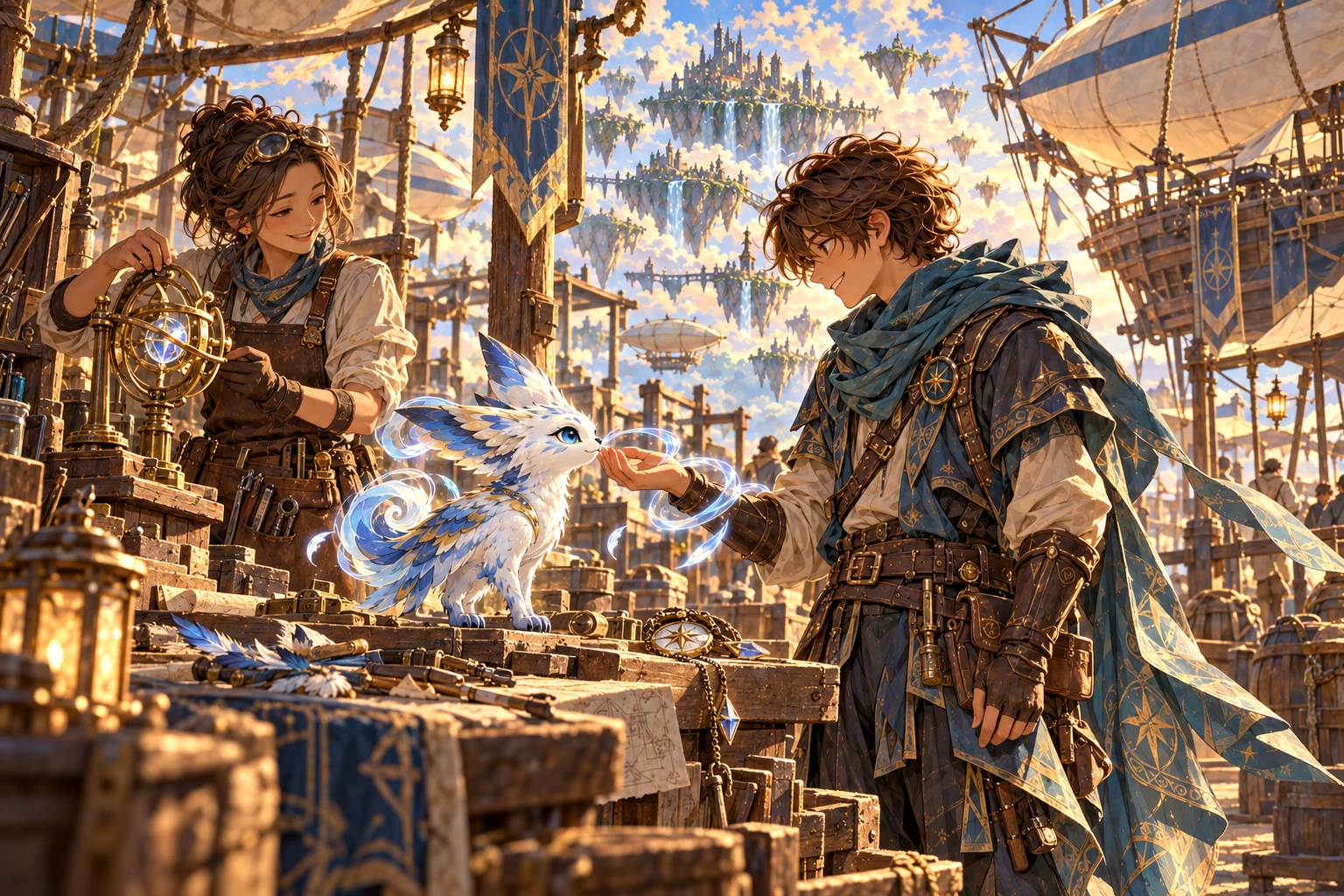
Plate 02 · New in Edition 3
The bond that completes the journey
The vertical slice ends here: a quest delivered, a companion bonded.
Chapter 02 The first journey
One quest, one companion, two towns.
The first playable slice of Galespun now has a clear shape. You begin in a town and accept a quest. The quest leads into a dungeon. Somewhere inside, you discover a companion. You clear the dungeon, extract what you found, and travel by airship to a second town. There you deliver the quest item to someone who can help, and that person helps you bond with the companion you found.
Bonding is the milestone that completes the slice. It pulls together every pillar at small scale: combat and discovery in the dungeon, the decision to extract, travel between places, a town with a service that matters, and the beginning of a partnership. If this short journey is fun on its own and makes you want the next one, the larger game has a foundation.
The first hour matters more than exhaustive system depth. Each system in the slice needs one meaningful interaction, not a complete ecosystem. A quest board that sends you somewhere, a dungeon worth leaving, a ship that can carry you, and a person who can help are enough to prove how the pieces connect.
Every first journey starts with a note from someone who needs help.
A marker over the route between two towns.
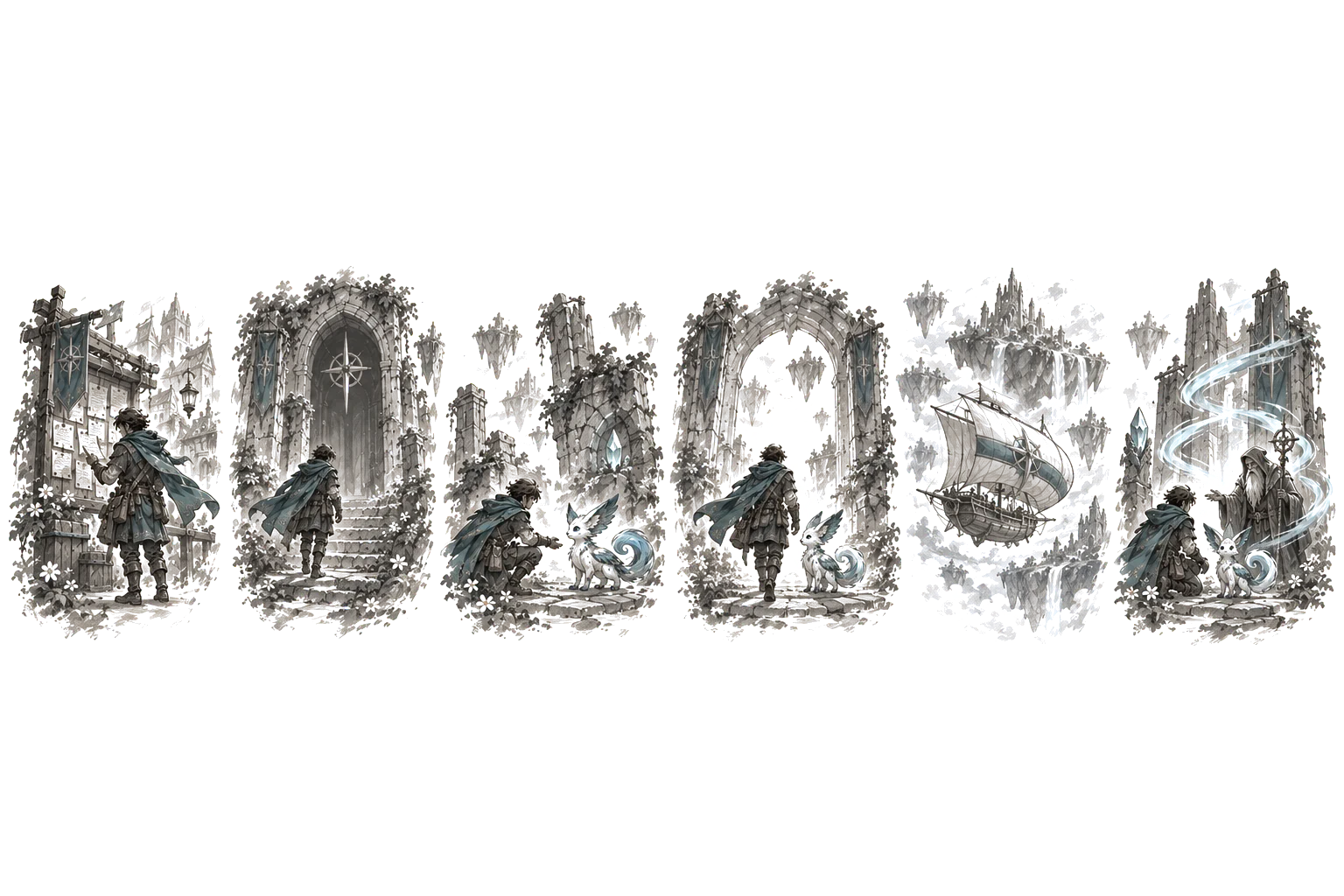
- Quest
- Dungeon
- Discovery
- Extract
- Voyage
- Bond
Every pillar at small scale. If this short loop is fun, the larger game has a foundation.
Plate 03.1
First, a step into the unknown
The opening begins with one traveler, facing the scale and uncertainty of a first dungeon.
Plate 03.2
Then, someone beside you
A quiet first meeting explores the moment a solitary adventure becomes a partnership.
- 1The traveler crouches to eye level. The first meeting happens on the companion’s terms.
- 2Ears up, body angled away: curious, not yet committed.
- 3Ruins carry the compass-star too. The world is older than the traveler.
Chapter 03 Your first companion
Start as one. Discover what two can become.
The trainer enters that first dungeon alone. Before there is a roster, before elaborate combinations, there is one person learning how to move through danger. Finding the first companion is the first major power spike. It should feel like a complete increase in what you can do: a new presence beside you, a new source of power, and a relationship you learn through play rather than through a tutorial.
Once that partnership begins, combat centers on one active companion. You control the trainer while your companion follows and attacks, with powers you deliberately trigger. Only the active companion gains experience during a run, so training someone new is always an intentional choice. Unlocking more companions and gaining the ability to switch between them is meant to be one of the most satisfying rewards in the game.
Later companions can arrive through quests, dungeon encounters, discoveries and recruitment. A roster of roughly twenty to twenty-five companions could be enough if each one feels distinct: elemental families such as wind, earth, leaf and water share themes, while each individual has its own mechanics and a clear reason to choose it. Some companions may simply be stronger than others. A powerful newcomer usually starts with little permanent progression, so bringing it back to an earlier dungeon becomes a training project and gives familiar places a new purpose.
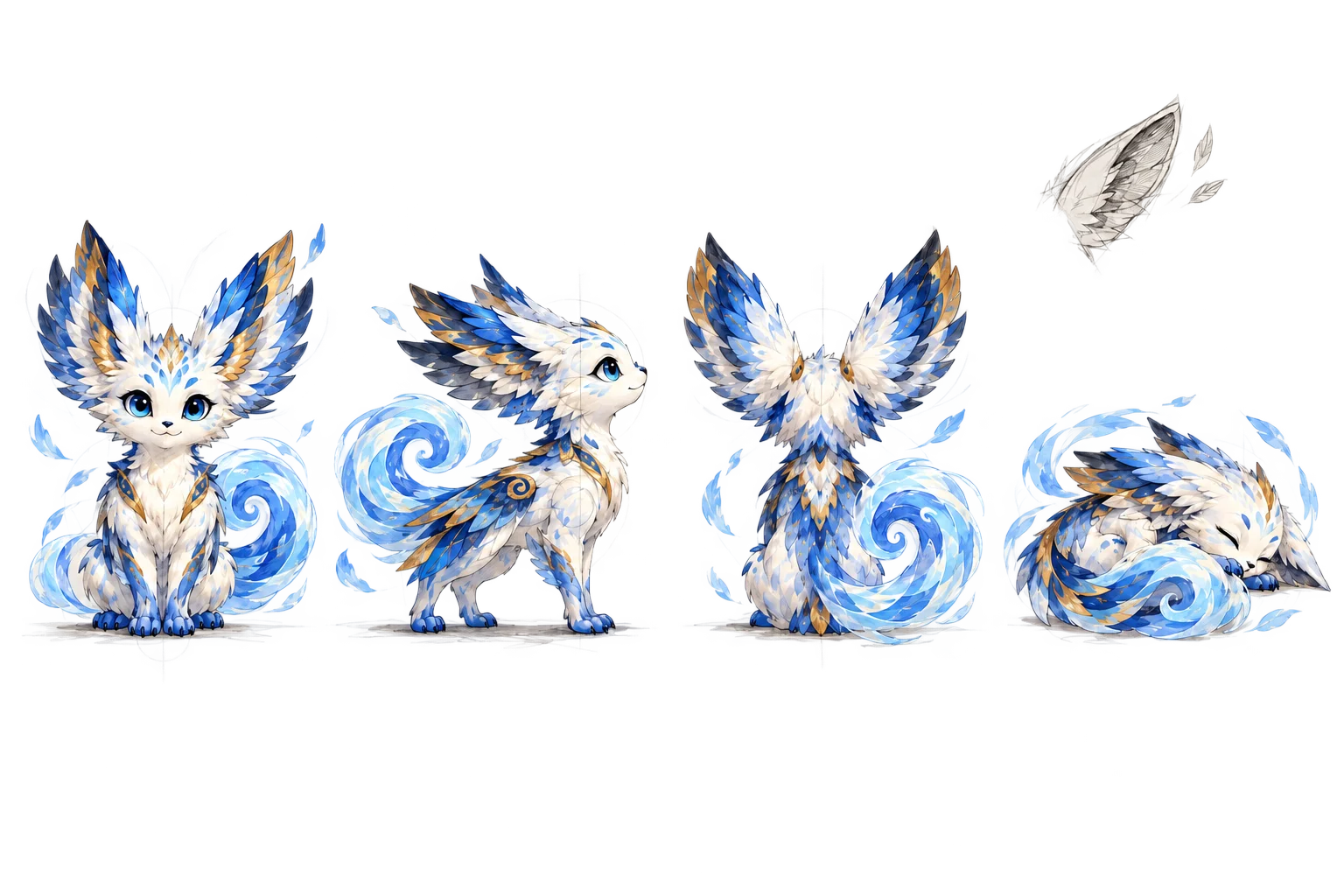
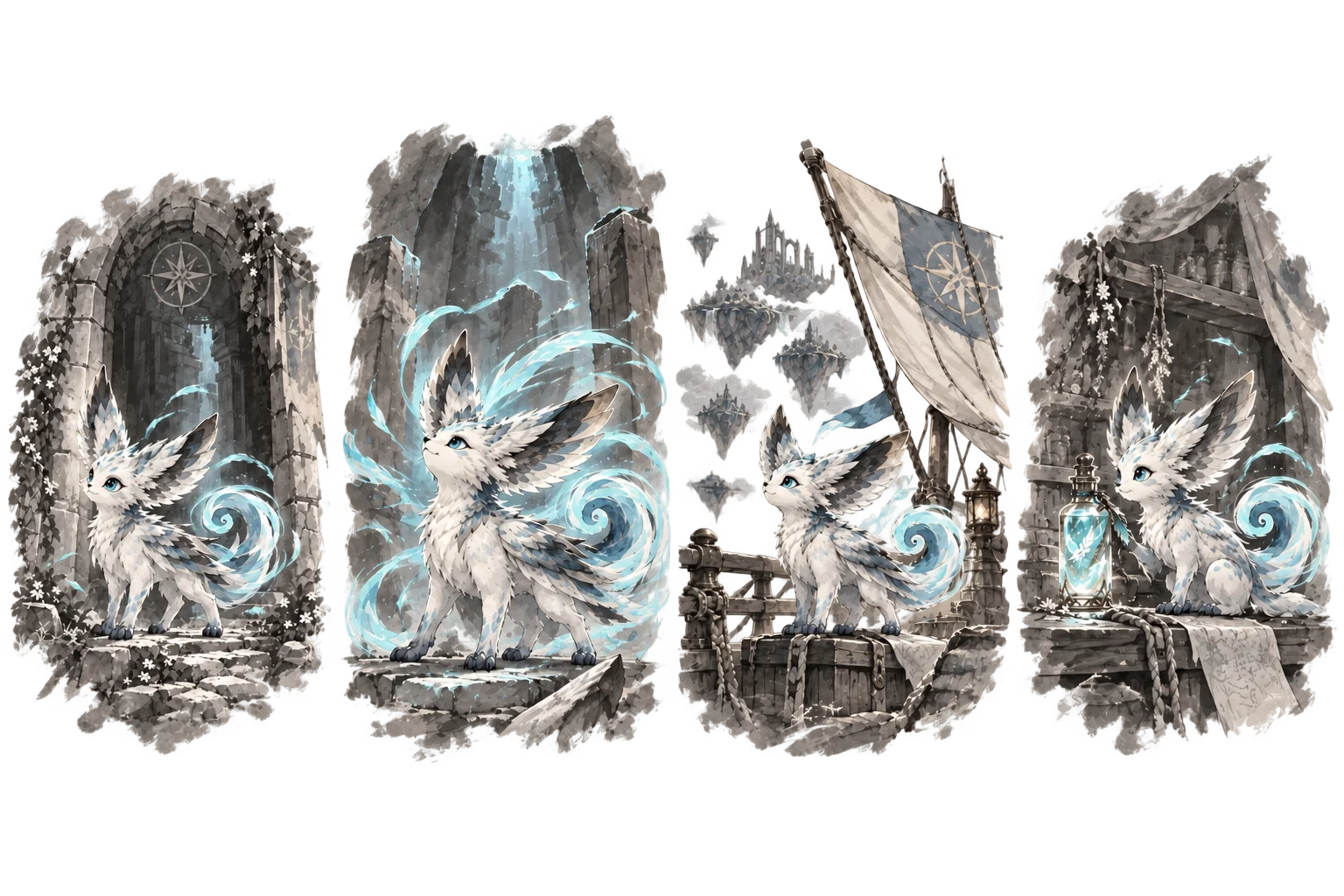
- Front
- Side
- Back
- At rest
The ears do the acting. Tail swirl should always read as wind, never fur.

Plate 04
Two roles. One opening.
Positioning, an enemy’s wind-up and a companion’s wind power make the partnership readable in action.
Chapter 04 The feel of combat
Make the partnership feel good in your hands.
Combat is designed around a controller, with the Mac as the first place it has to feel right. The trainer is your point of contact with the world: movement, positioning and the timing of commanded powers should make a visible difference. A companion’s automatic attacks give a steady rhythm, while deliberate abilities let you intervene. Switching companions carries a cooldown and a real cost, so a switch is a decision.
Abilities are organized around a few controller roles rather than an ever-growing list. Likely roles include attack, movement or dash, defense or shield, an area effect and a special. You only have so many buttons, and nobody needs three different dashes. When you discover a new power, it can replace, improve or transform the move already in that role. The exact button count is not final.
The trainer is more than a way to move a companion around. Weapon classes start with one or two and grow over time. Cooldowns are the foundation for abilities, and they give the trainer a distinct kind of growth: reducing a companion’s cooldowns, extending range, widening area effects and improving critical hits. Guardians bring all of this into focus. Timing, patterns, additional enemies and preparation matter together, and the build that is comfortable through ordinary rooms may struggle at the end.
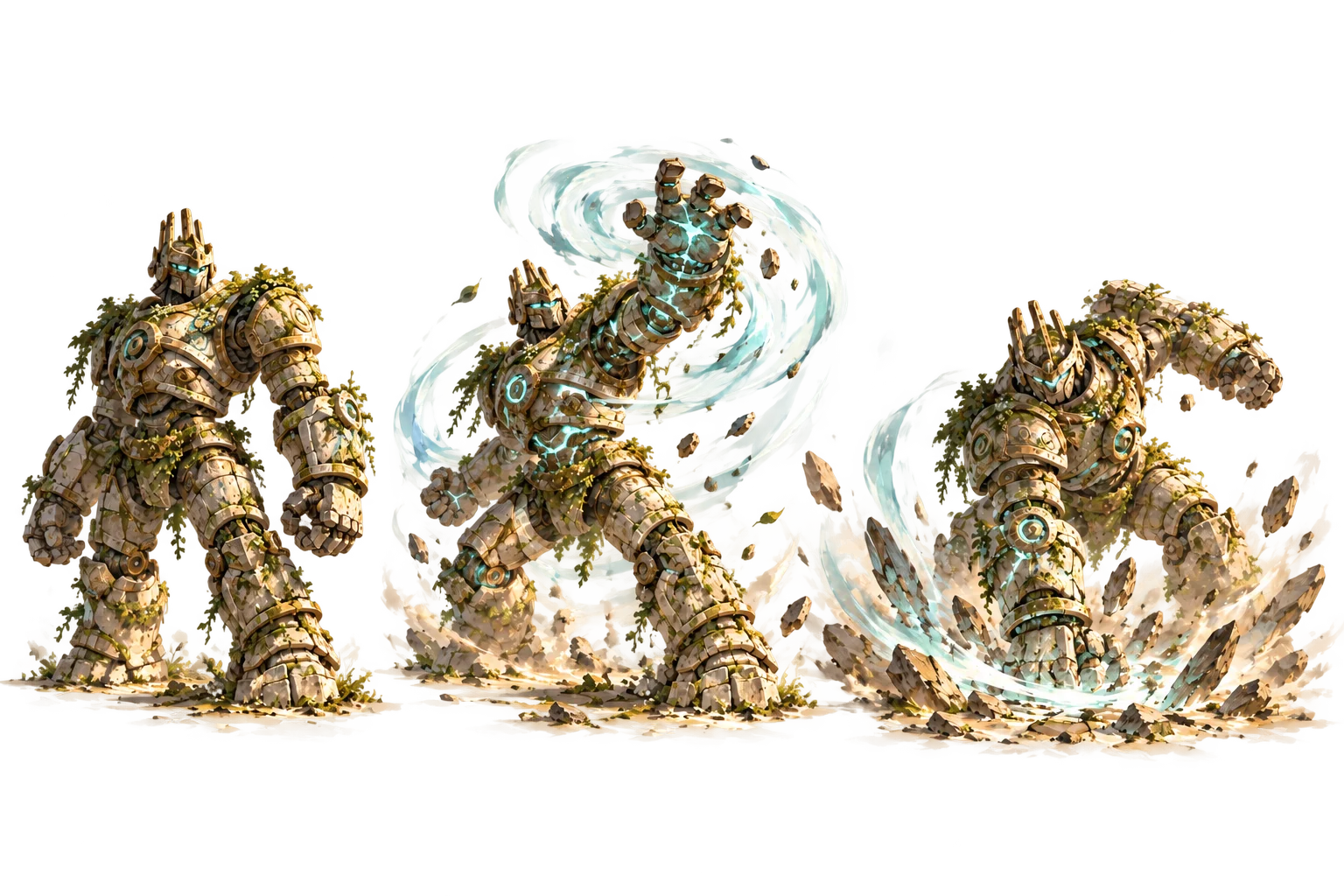
- 1 · Idle
- 2 · Wind-up
- 3 · Strike
A good telegraph is a promise to the player. The glow gathers before the strike, every time.
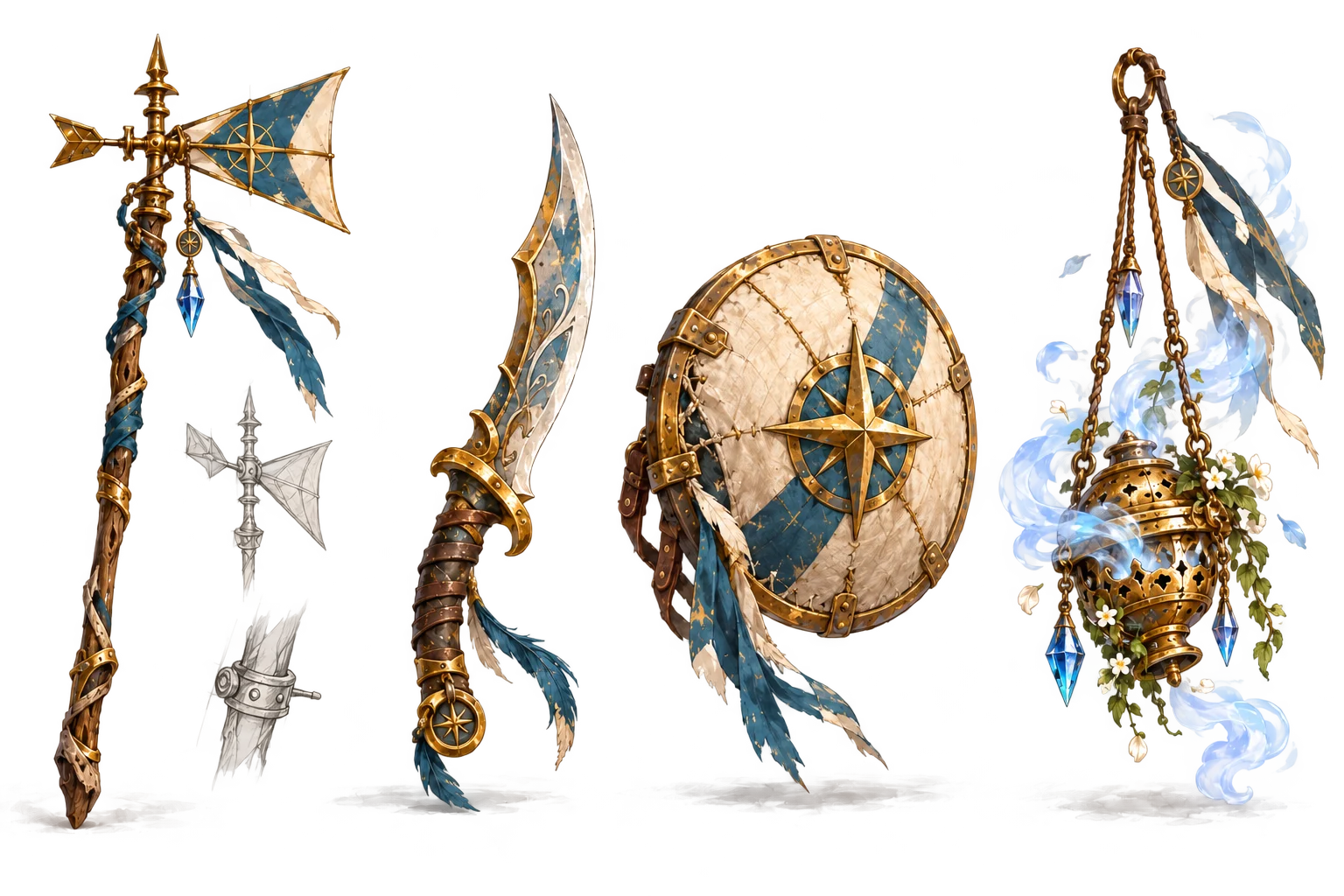
- Gale staff
- Short blade
- Sail buckler
- Mender's censer
Small to start. Each one should suggest a different relationship with the companion.
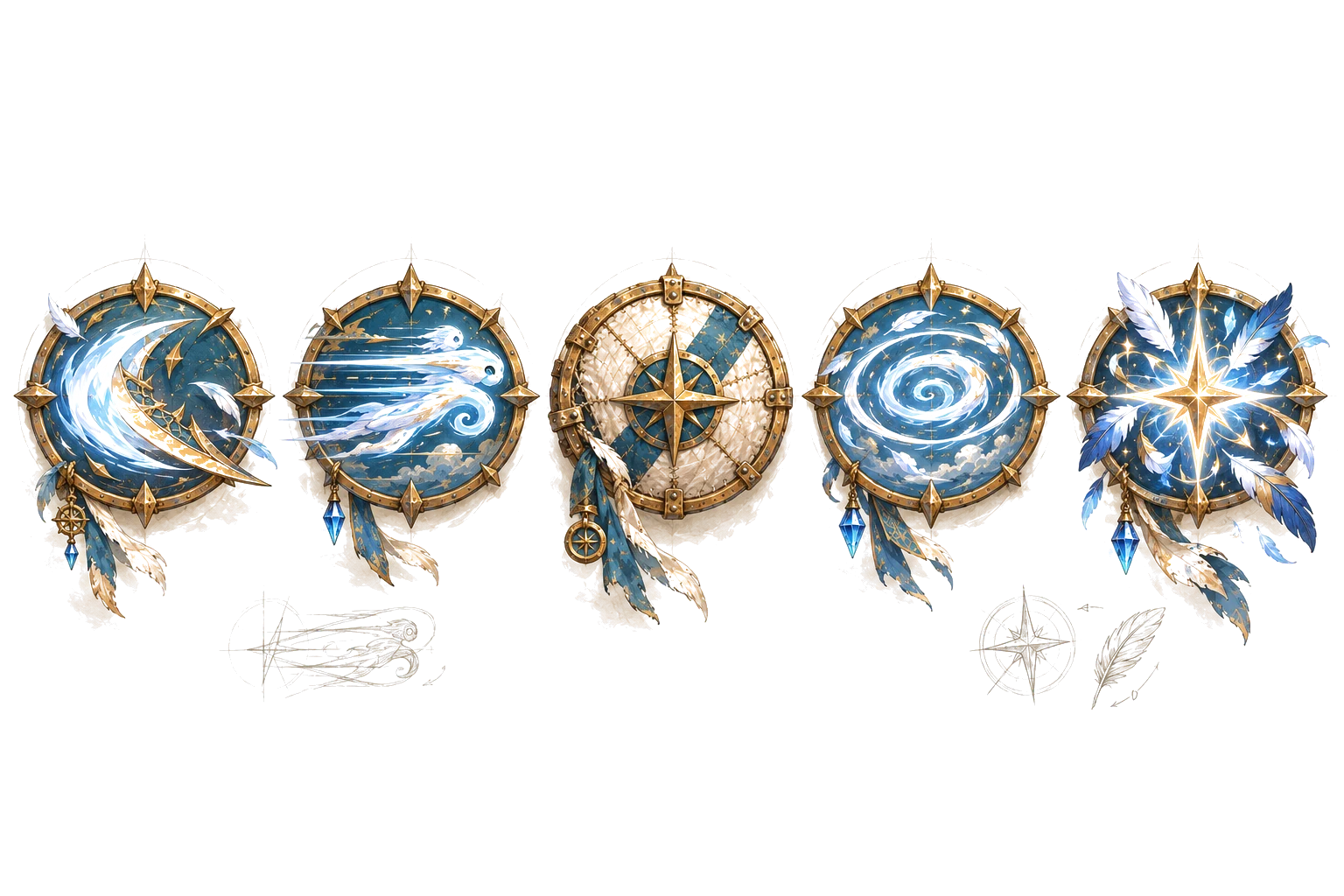
- Attack
- Dash
- Shield
- Area
- Special
A new power replaces, improves or transforms what sits in its role. Nobody needs three dashes.
Plate 05.1
A place you can learn
Readable passages and familiar landmarks give repeated visits a sense of growing mastery.
Plate 05.2
Depth changes the journey
Narrow paths, vertical spaces and rare resources suggest a different kind of pressure farther below.
Chapter 05 The dungeon journey
Learn a place. Then decide how hard to push it.
A dungeon is both a test of your current power and a place you gradually understand. The first version uses authored maps. Rooms can have different conditions for success, but each should be clear enough that familiarity becomes mastery. Deeper areas change hazards, layouts, enemy behavior and pressure on resources, and rarer materials wait further down.
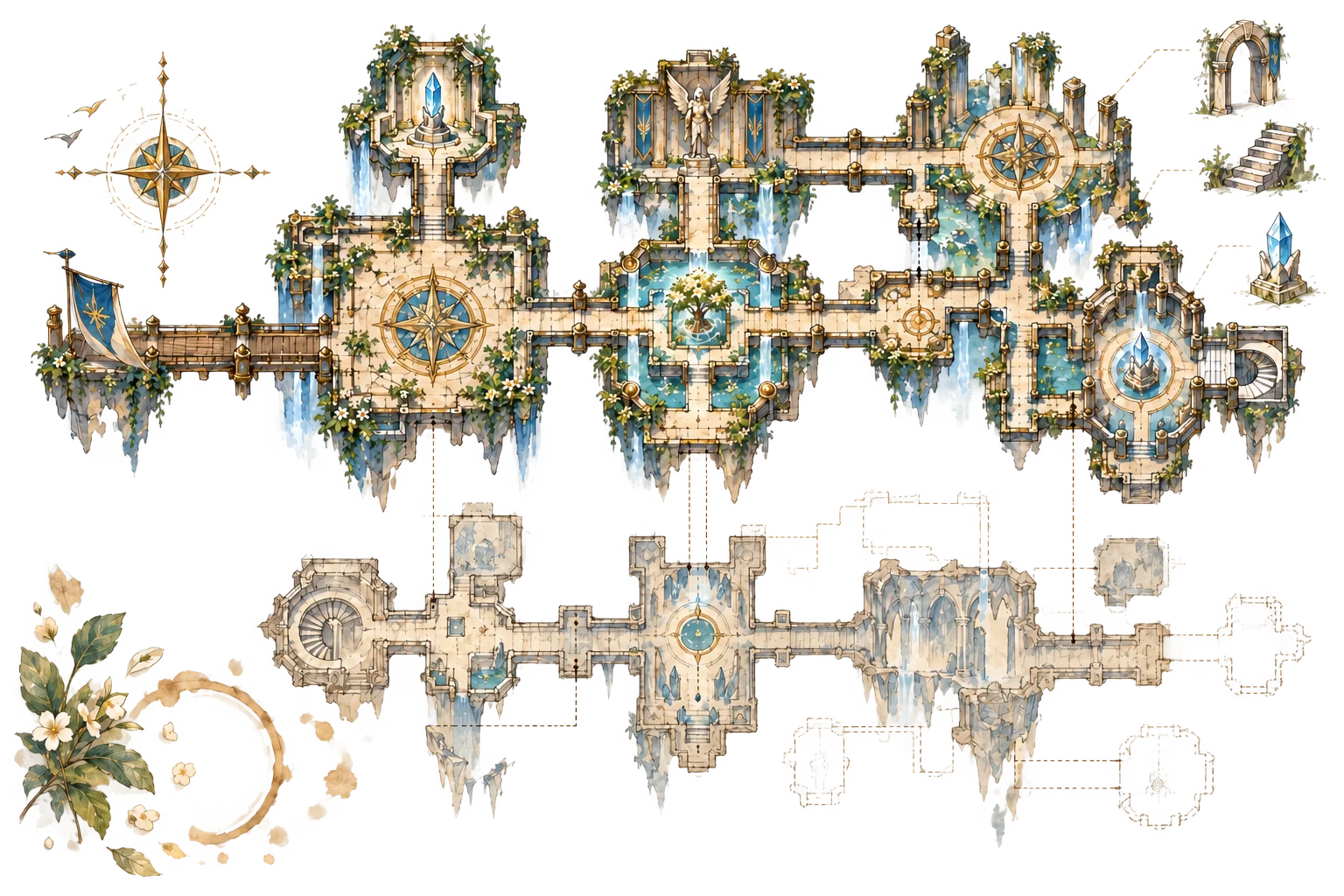
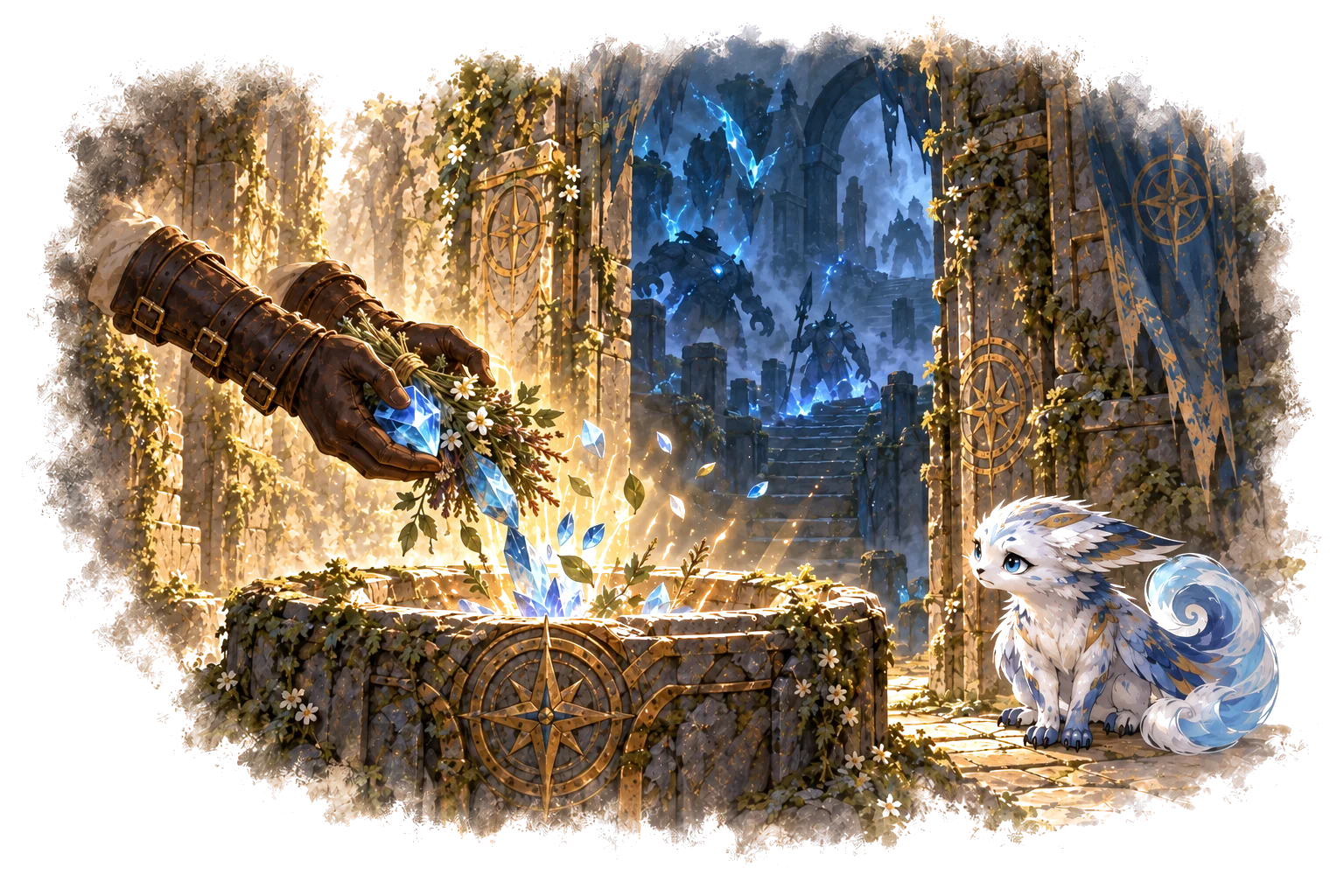
A dungeon can also be pushed. Progress in cities and the wider world raises how hard a dungeon can become. Within that ceiling, you can spend resources to temporarily juice a single run: stronger monsters, more enemies, elites, altered attacks or hazards. The danger should be real, not just a larger number. The reward is a better chance at the specific material you came for.
Players should know enough to choose a dungeon for a purpose. A dungeon can be known for particular chase materials, such as a rare petal, an evolution ingredient or a permanent-progression component, while exact drops stay uncertain. The loop we want is simple to say and hard to master: raise your access, spend resources, increase the danger, chase a specific reward, then extract or lose the haul.
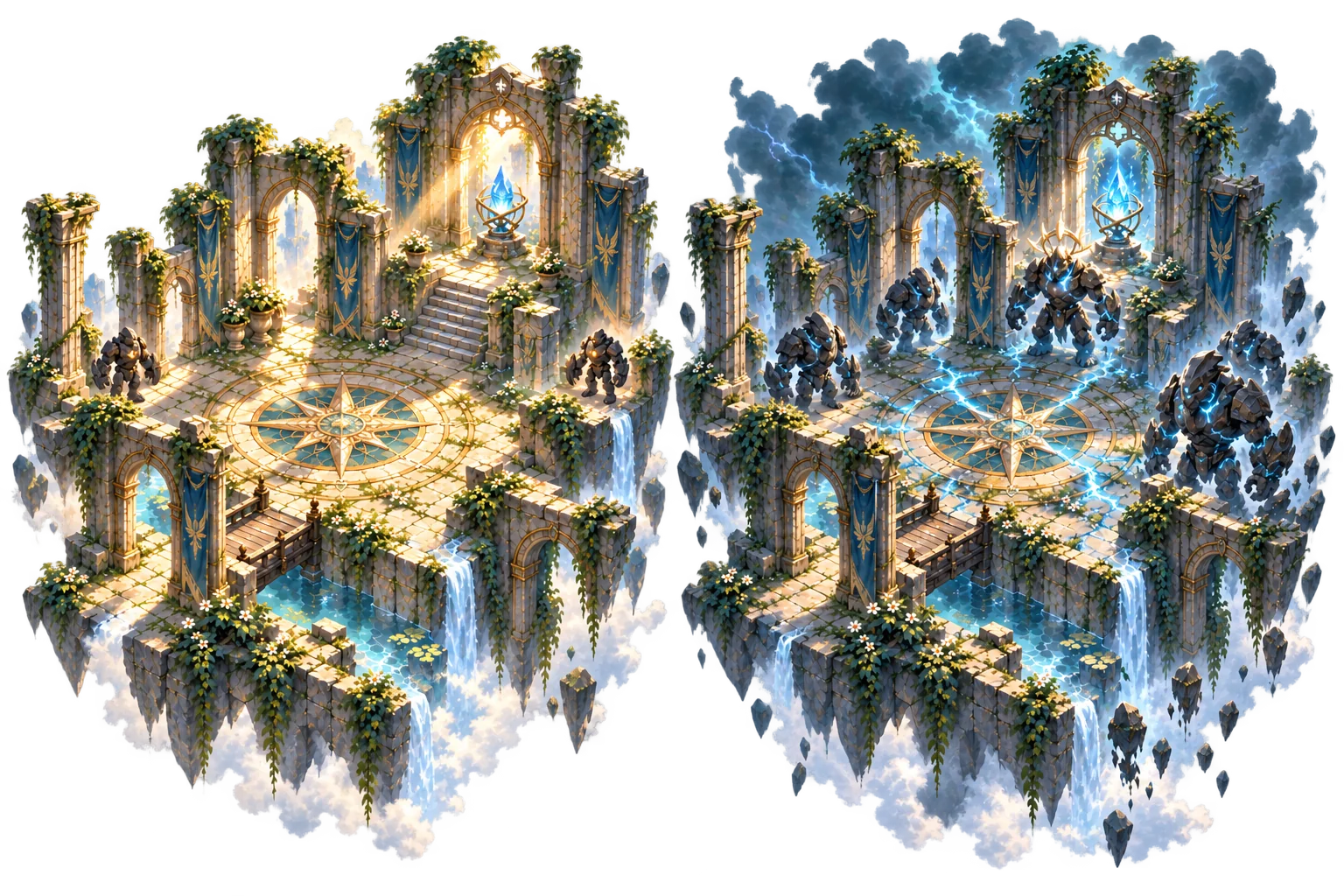
- Baseline
- Juiced
Same room, same camera. The danger should be real, not just a larger number.
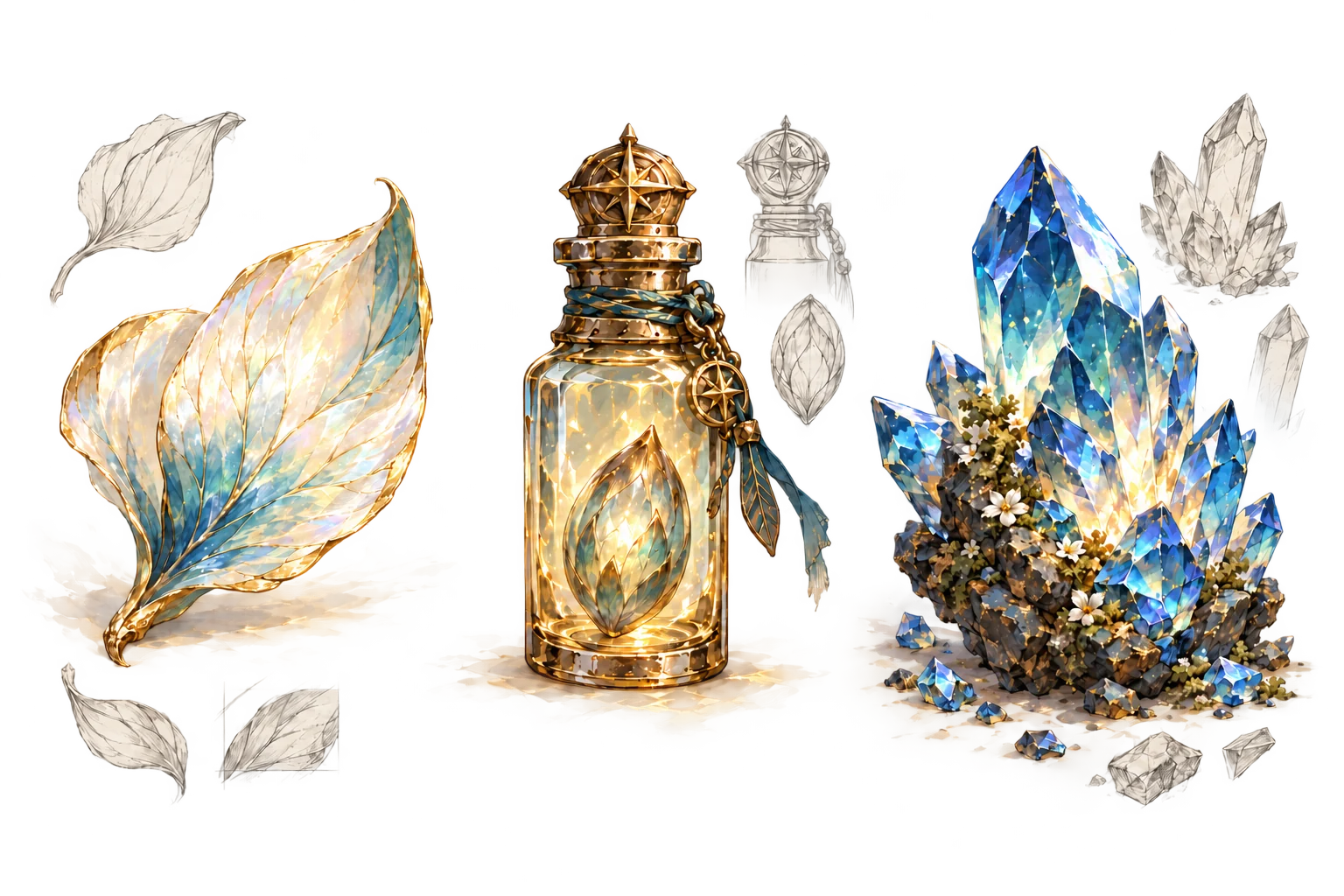
- Rare petal
- Evolution ingredient
- Progression core
You choose a dungeon for its chase materials. The exact drop is still a surprise.
Plate 06.1
Chase the rare find
A luck-focused build fantasy: accept vulnerability in pursuit of the component that matters.
Plate 06.2
Make one moment enormous
A burst-power fantasy: demanding combinations build toward an extraordinary release of energy.
Plate 06.3
Hold your ground
A defensive build fantasy: endure the pressure and create room for the next move.
Chapter 06 A build for this run
Two possibilities, one choice, keep moving.
Runs are no longer built by browsing a large shop. Temporary powers are discovered during the run, closer to the feeling of a pickup that suddenly changes how you play. Enemy drops are mostly loot, materials, supplies and cargo for the airship. Combat powers are a separate discovery track. You can still pursue a familiar core build, while randomness asks you to improvise.
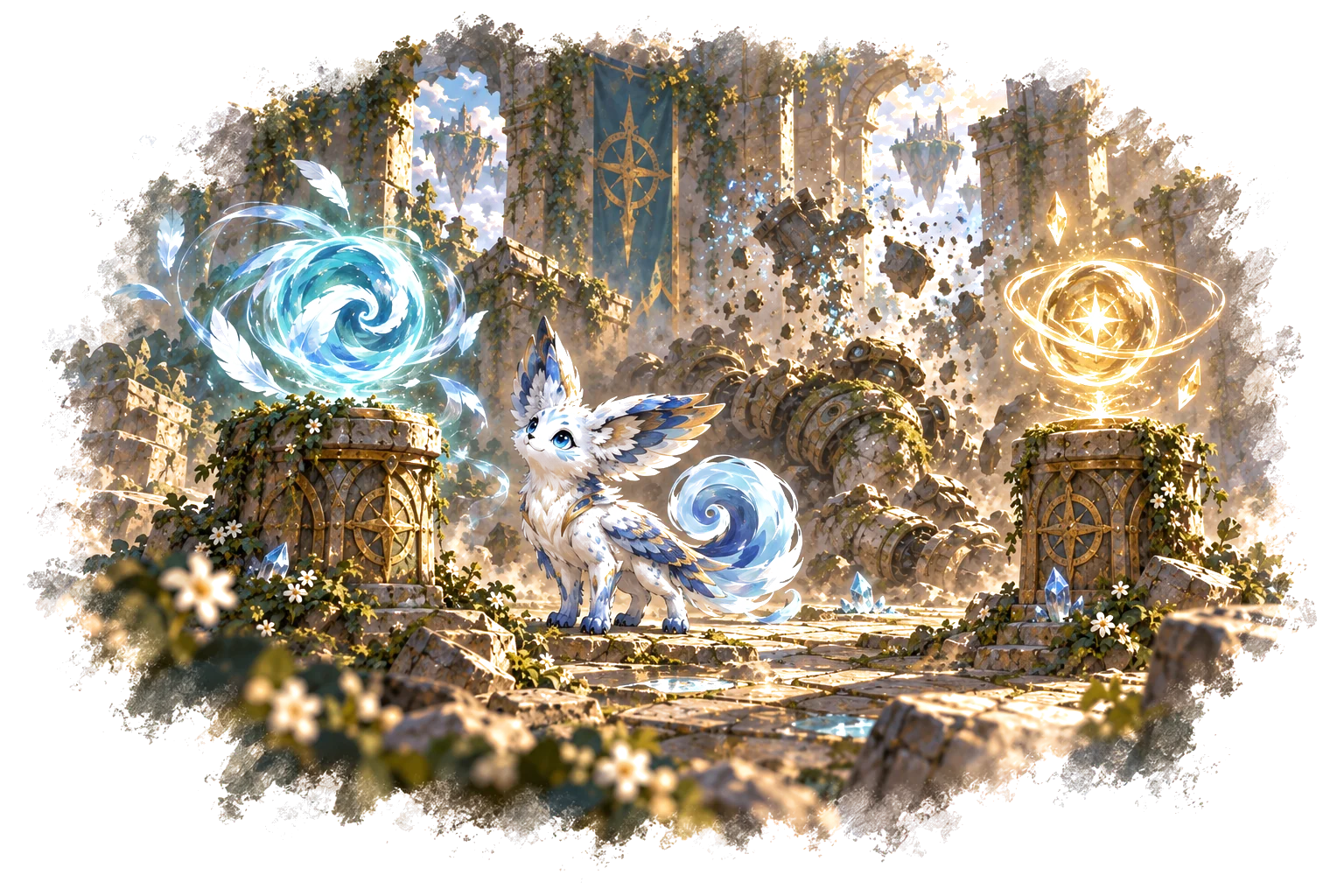
Choices are deliberately quick: one or two offers, with two as the current default. The goal is a nudge, not a shopping trip. Most powers shape the active companion; rarer ones change the trainer and companion together. Ordinary choices should mostly feel like upside, so the interesting question is which direction to grow. Strong tradeoffs belong to specialized powers, juiced dungeons and high-tier challenges.
We want builds with distinct ambitions. A treasure hunter gives up health or power to chase one rare drop. A glass cannon is fragile while the pieces come together, then erases whole groups with a single ability. A tank stacks defense, dodging, shielding or reflected damage until ordinary enemies barely matter, and pairs especially well with a trainer focused on healing. Health remains a real resource: sometimes you heal, sometimes you push the build further.
Early runs leave you at the whims of the winds. Rerolls start limited and expand with permanent progression, and mastery of move families can make a favored power more likely or set a mastered move aside while you try something new. Over time, randomness becomes a tool you can steer. Even so, challenging dungeons should always carry a real chance of death.
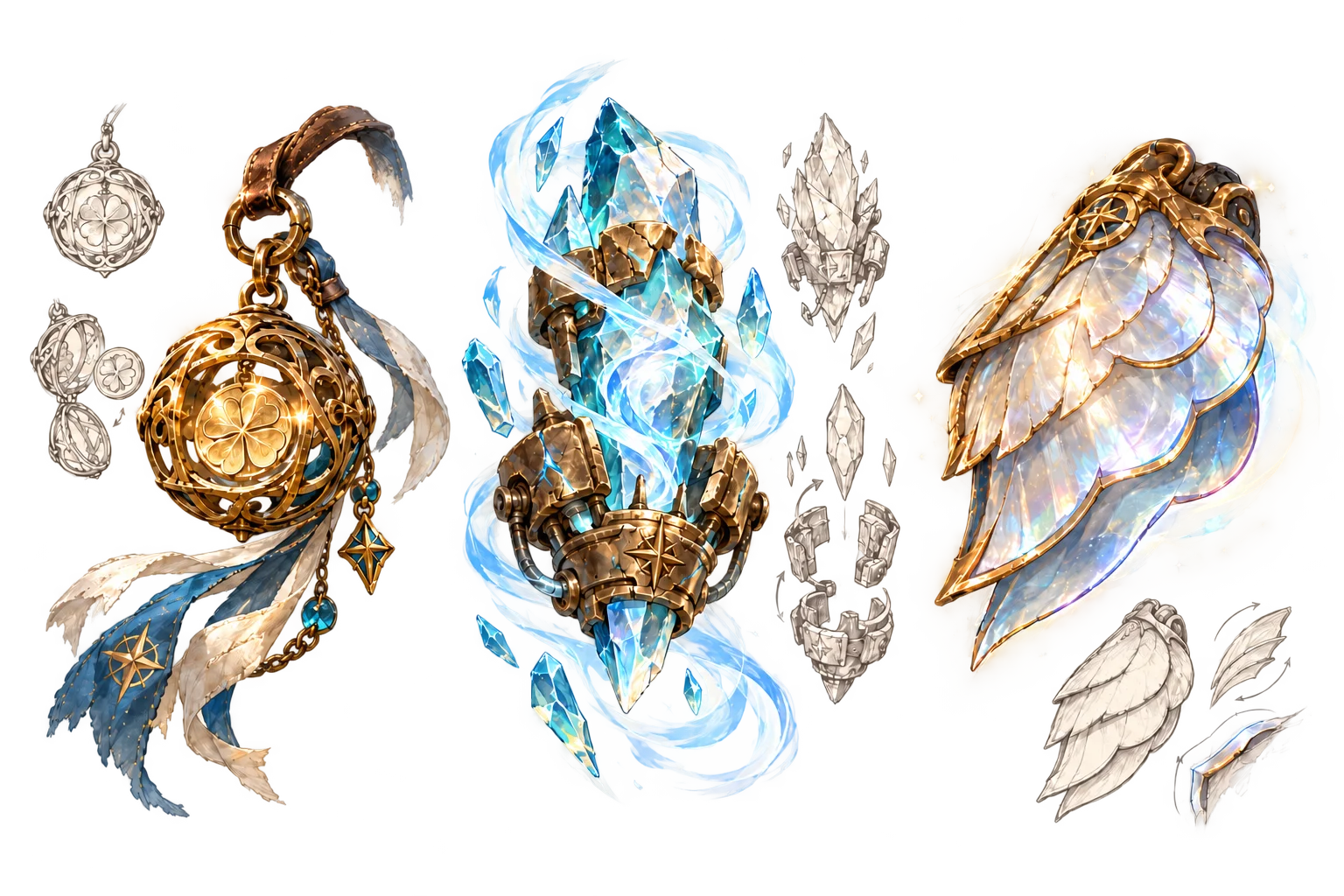
- Fortune charm
- Burst core
- Ward shell
Each find should announce the build it wants to become before you read a single stat.
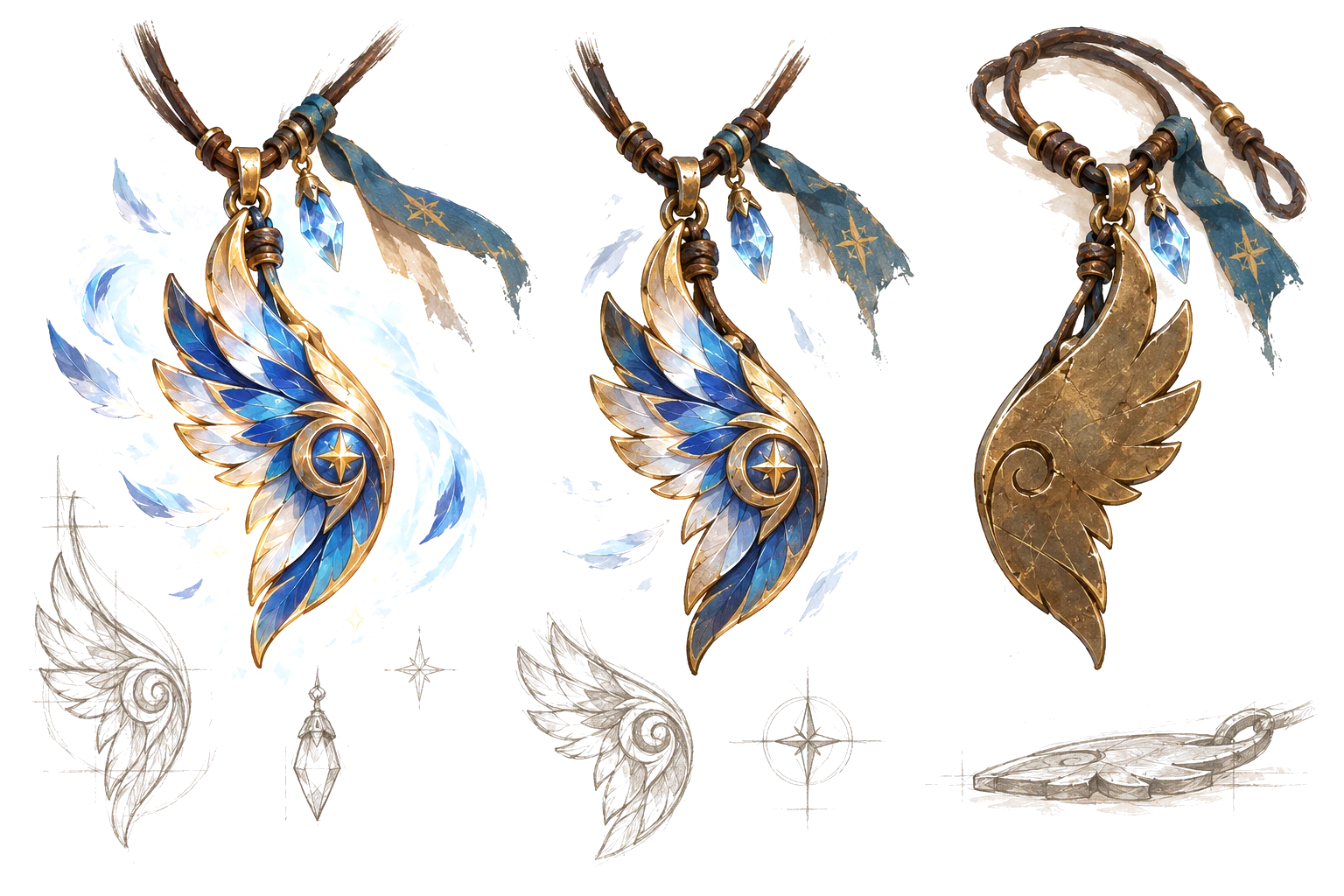
- Favored
- Familiar
- Set aside
A favored move comes up more often. A mastered one can be set aside.
Act II
The Return
Why coming back matters as much as going in.
Risk & returning · Cozy, Brave & comfort · Progress that stays
Plate 07
Enough to bring home. More to risk.
A packed bag changes the decision: the warmth of an exit competes with a tempting discovery deeper inside.
Chapter 07 Risk & returning
Leave with what you have, or push deeper?
Finding something valuable changes the feeling of a dungeon. Until then, pushing on is easy to justify. Once you are carrying a resource that could unlock the next step, the same choice acquires weight. You cannot leave at any moment. Extraction happens at designated exits and safe points, so taking one is a real decision. A rare emergency escape could exist later.
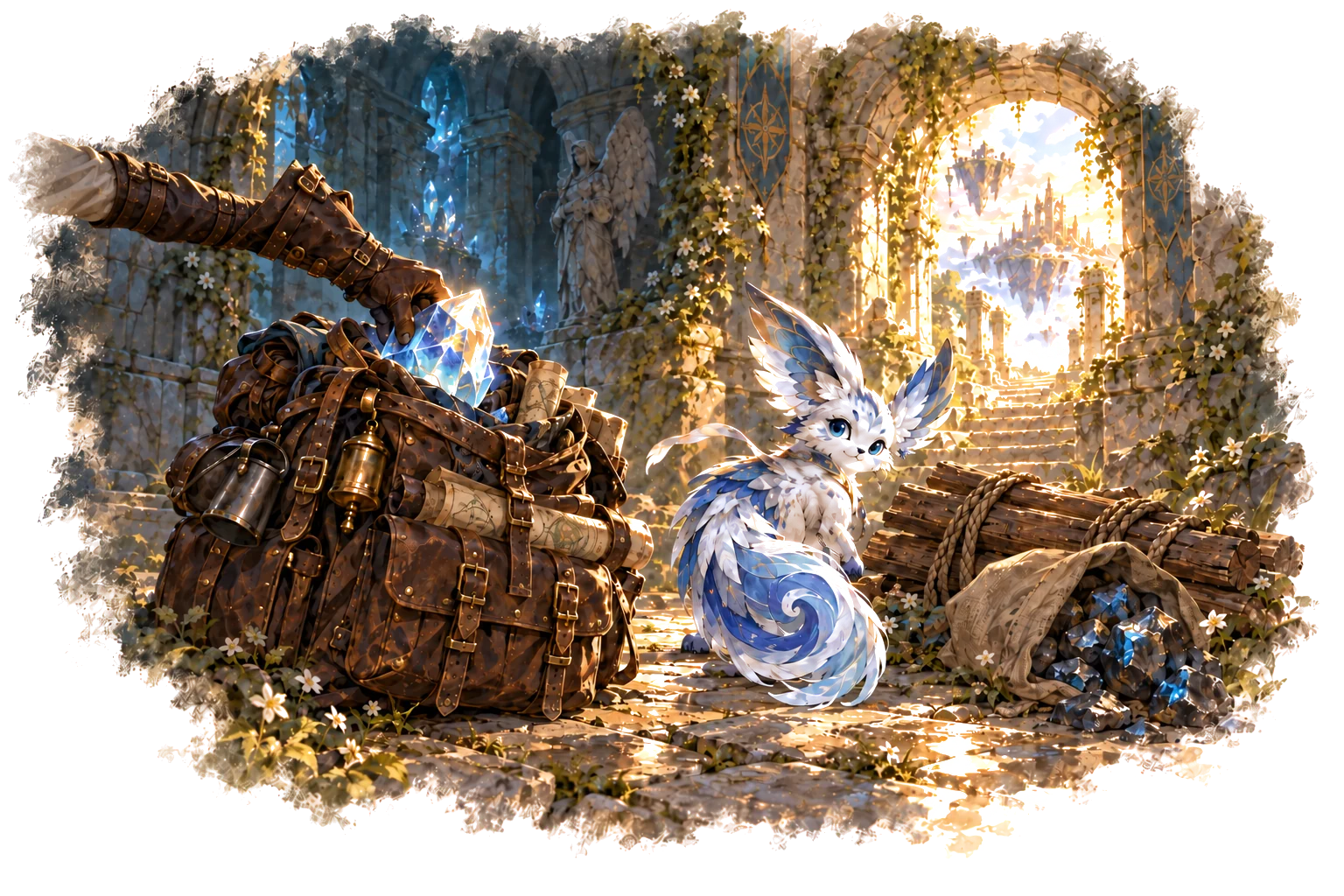
Defeat costs the unextracted haul and the temporary experience earned in that run. It never costs the progress you had already secured: banked money, locked-in stats, permanent companion growth and stored resources are safe. There is no death spiral. If you fail, you keep your permanent state and try again, using basic expeditions to rebuild supplies if you need to. A later idea is a rare, hard-won way to protect a single chosen item from loss.
Carrying capacity is part of that tension. Your pack only holds so much. When a valuable find does not fit, you choose what to keep and what to leave behind; the game does not quietly solve it for you. Early scarcity is intentional, and it gives every later capacity upgrade meaning.
The run ends.
Your journey carries on.
The flare that calls the ship. Leave with what you have.
Chapter 08 Cozy, Brave & comfort
Choose the stakes. Never pay for comfort.
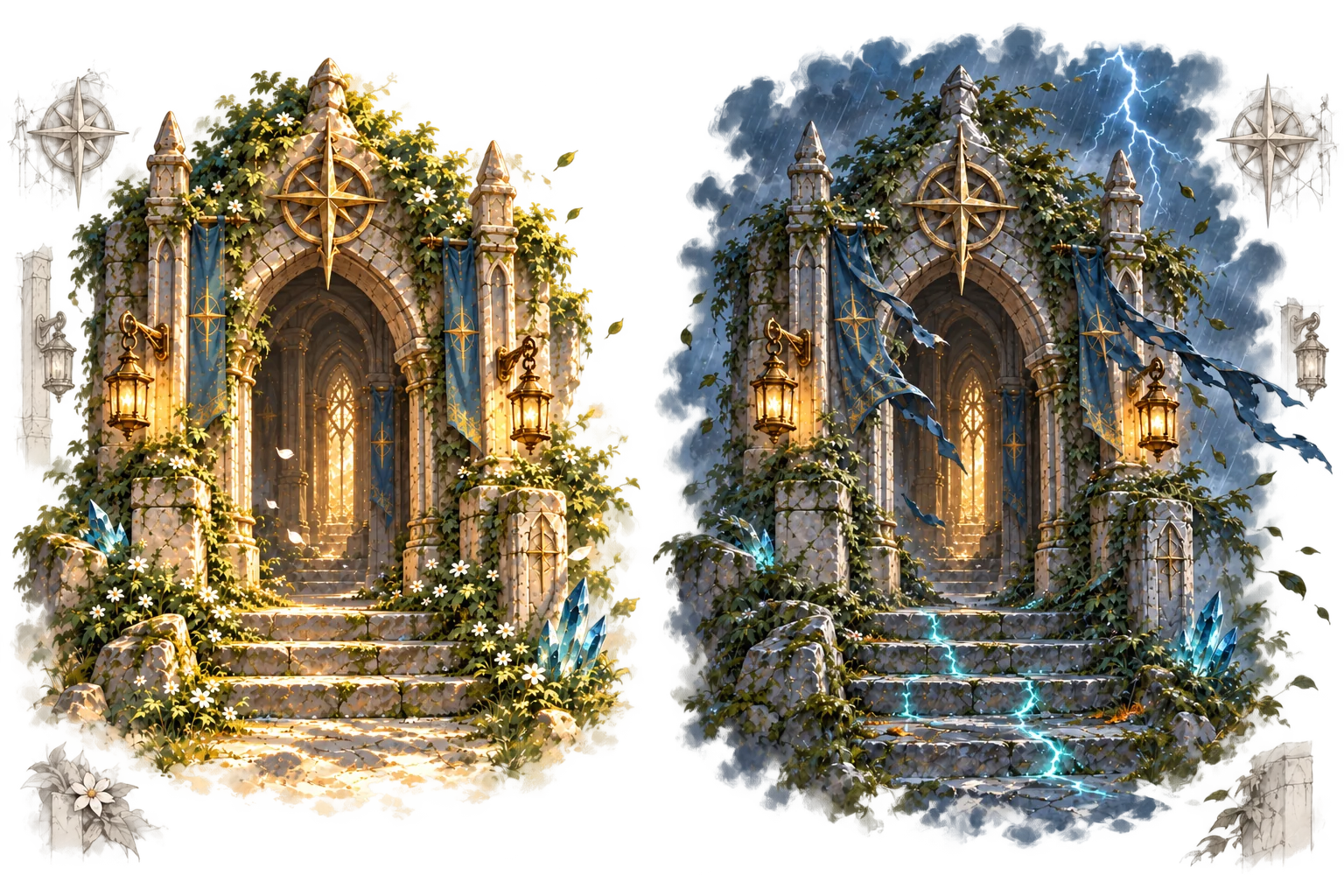
Cozy and Brave are two ways to hold the same adventure. They change combat pressure, loot gain and the rules for losing what you carry. Brave offers harsher consequences and stronger rewards. Cozy is more forgiving, with gentler rewards to match. Difficulty is chosen before a run and locked until it ends.
The same philosophy applies to rescues. In Cozy or early play, a rescued companion or person can be safe the moment you find them. In Brave or high-stakes play, you may need to extract successfully before a rescue is secured. Players who want attachment without punishment get it, and players who want tension get that instead.
Cozy also offers percentage-style assists, such as slower or less damaging enemies, and those can affect rewards. Accessibility is a separate thing. Text size, control remapping and color-vision support are always available and never reduce loot. Teaching follows the same spirit: the first dungeon teaches movement, attacks and switching through play, with only light prompts.
Brave: the same world, with sharper stakes.
- Cozy
- Brave
Chosen before you go, locked until you return.
Plate 09
Turn a find into a stronger beginning
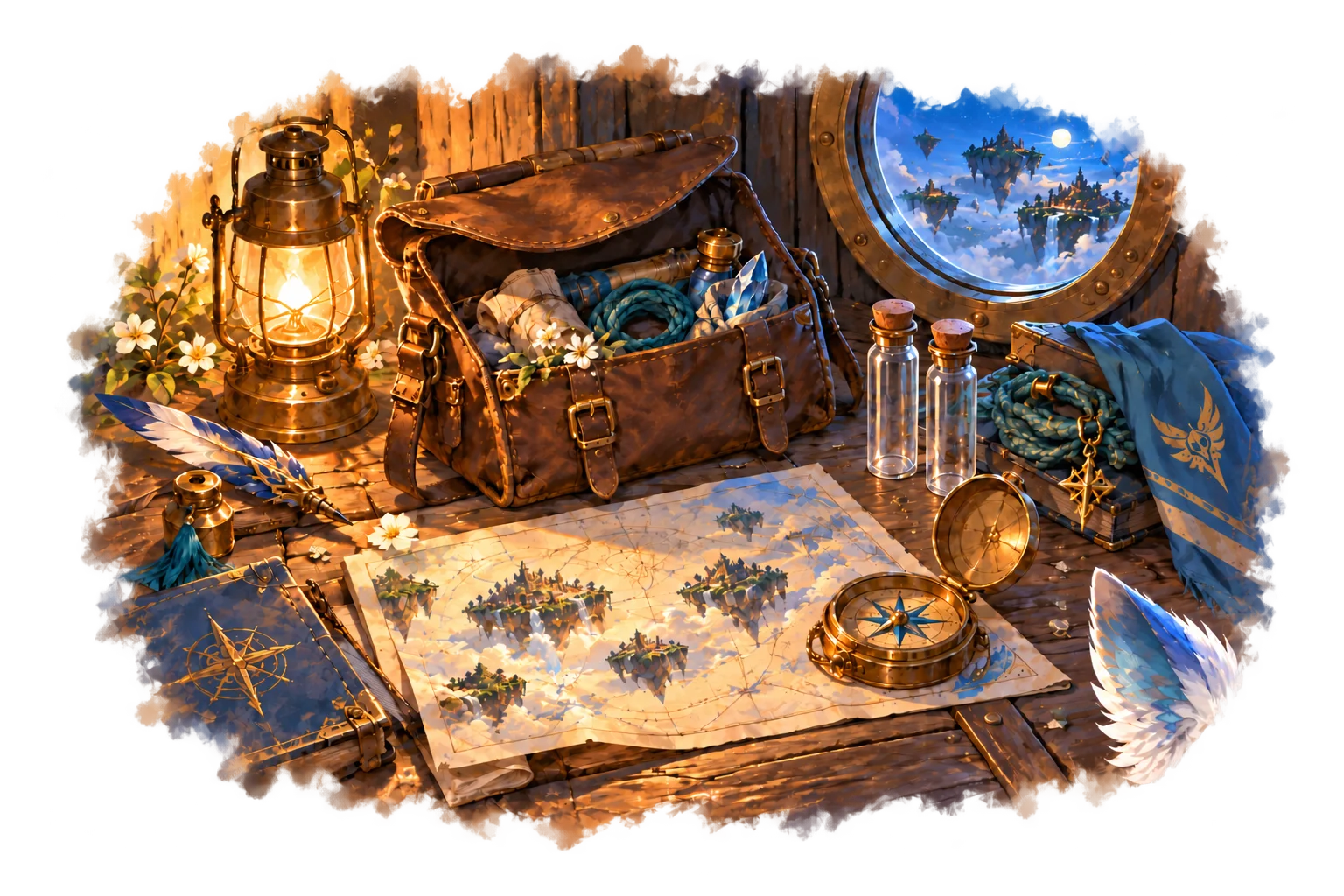
Recovered resources and a crafted tonic illustrate the working idea of loot becoming lasting companion power.
- 1Raw finds stay rough and uncut, so the finished tonic feels earned.
- 2The tonic keeps its ingredients visible. You can see where the progress came from.
- 3Zephyrveil watches the work. Companions belong in quiet scenes too.
- 4The next island is framed in the window. Growth always points outward.
Chapter 09 Progress that stays
A powerful run ends. A stronger beginning remains.
Galespun separates the excitement of becoming powerful inside a run from the slower satisfaction of strengthening your starting point. A companion might enter a dungeon at level ten and reach twenty during the run. When you leave, it returns to ten. The materials you extracted can then be crafted into permanent progression that raises its starting level, perhaps to twelve. The next run starts from a higher floor, and temporary levels carry you further still.
Permanent evolution is rare and milestone-like. It needs both a permanent level threshold and a rare crafted evolution item, made from a dungeon find plus materials gathered through play and possibly trade. The feeling we want is that you raised this companion and completed a real material chase before it changed. Temporary evolution within a run may also exist; how the two relate is still open.
The trainer grows differently. A permanent, skill-tree-like layer makes the trainer better at enabling companions through faster cooldowns, longer range, wider area effects, stronger critical hits, and support, healing or defense. Permanent power should build slowly at first and much faster toward the end. It should always increase what you can attempt without ever making you invulnerable.
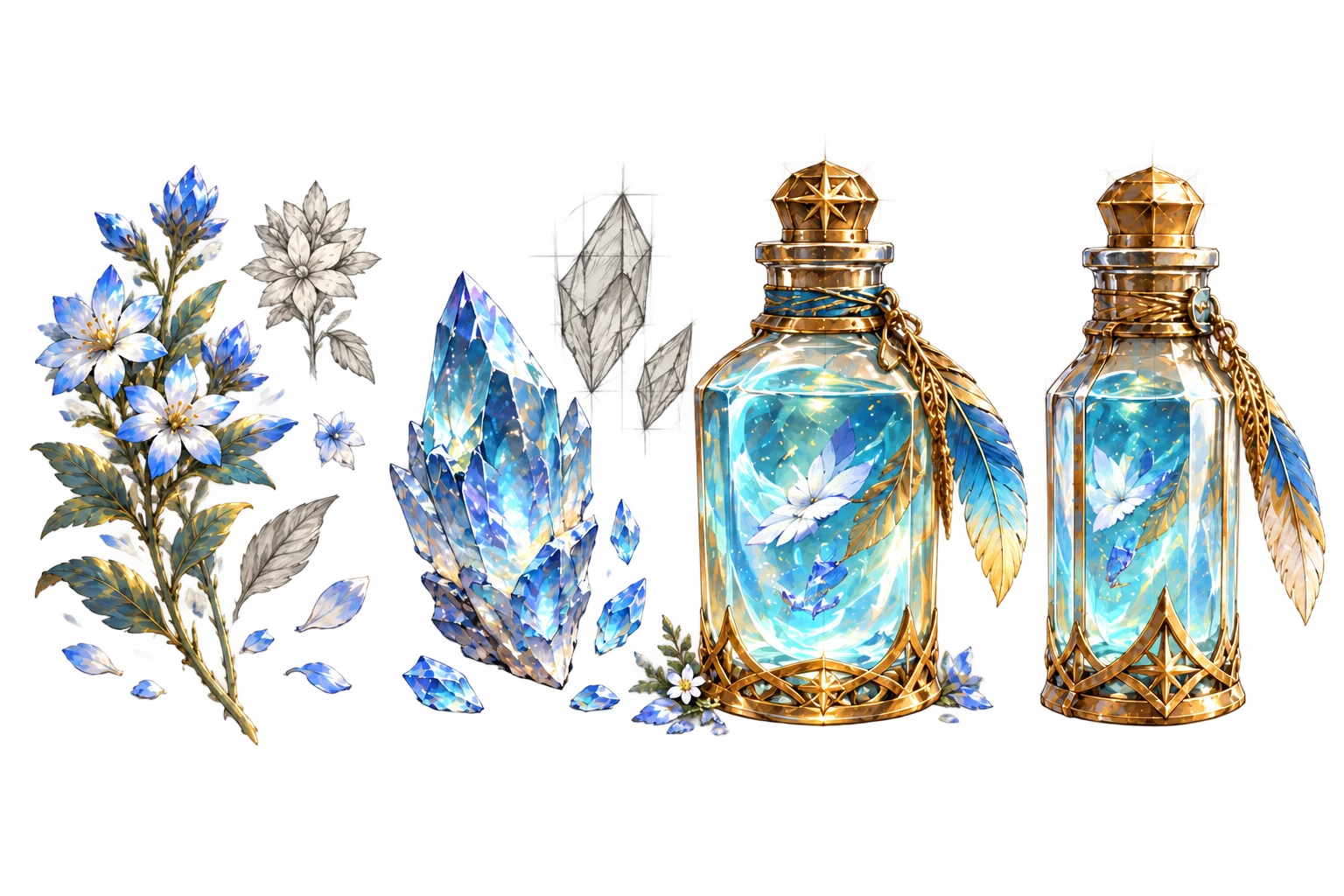
- Wild herb
- Crystal shard
- Finished tonic
- Side view
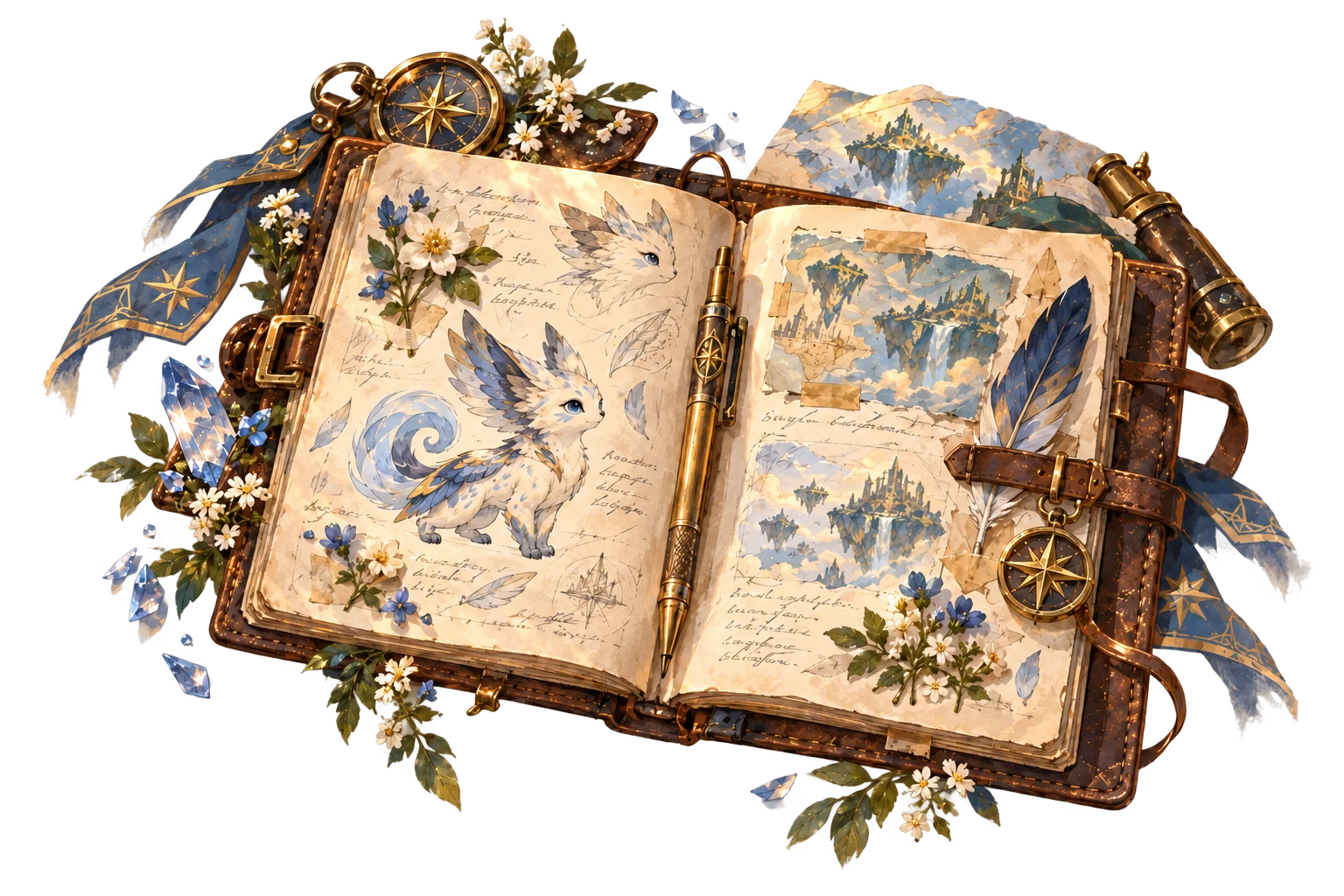
Progress you can hold. The ingredients stay visible inside the finished thing.
- Set out
- Deep in the run
- Home again
- A higher floor
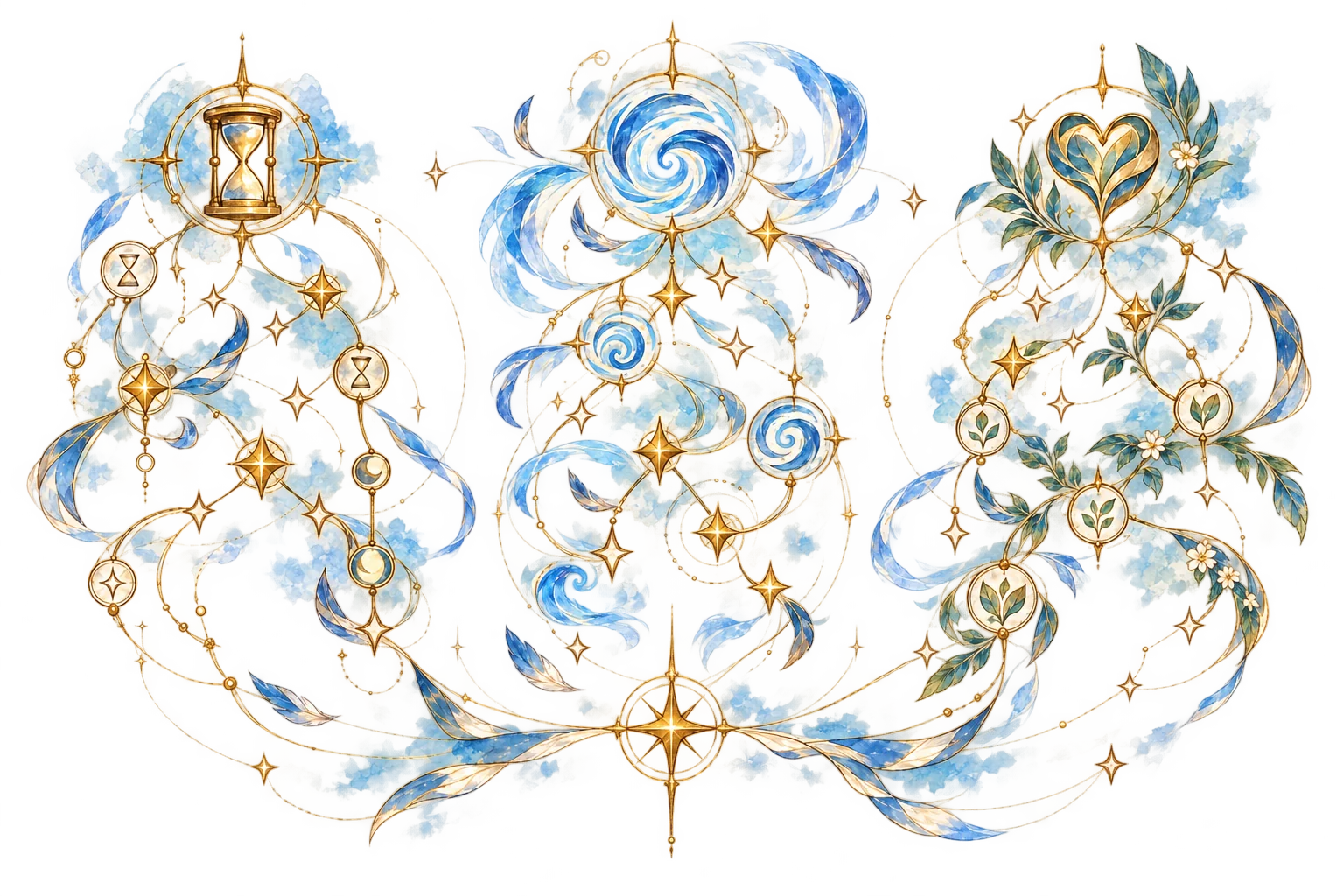
Temporary levels in the dungeon. Permanent growth from what you extract.

Act III
The World Above
The ship, the crew and the ports that give a find its purpose.
A home in the sky · People & belonging · Ports, markets & cargo
Plate 10
A home with room to grow
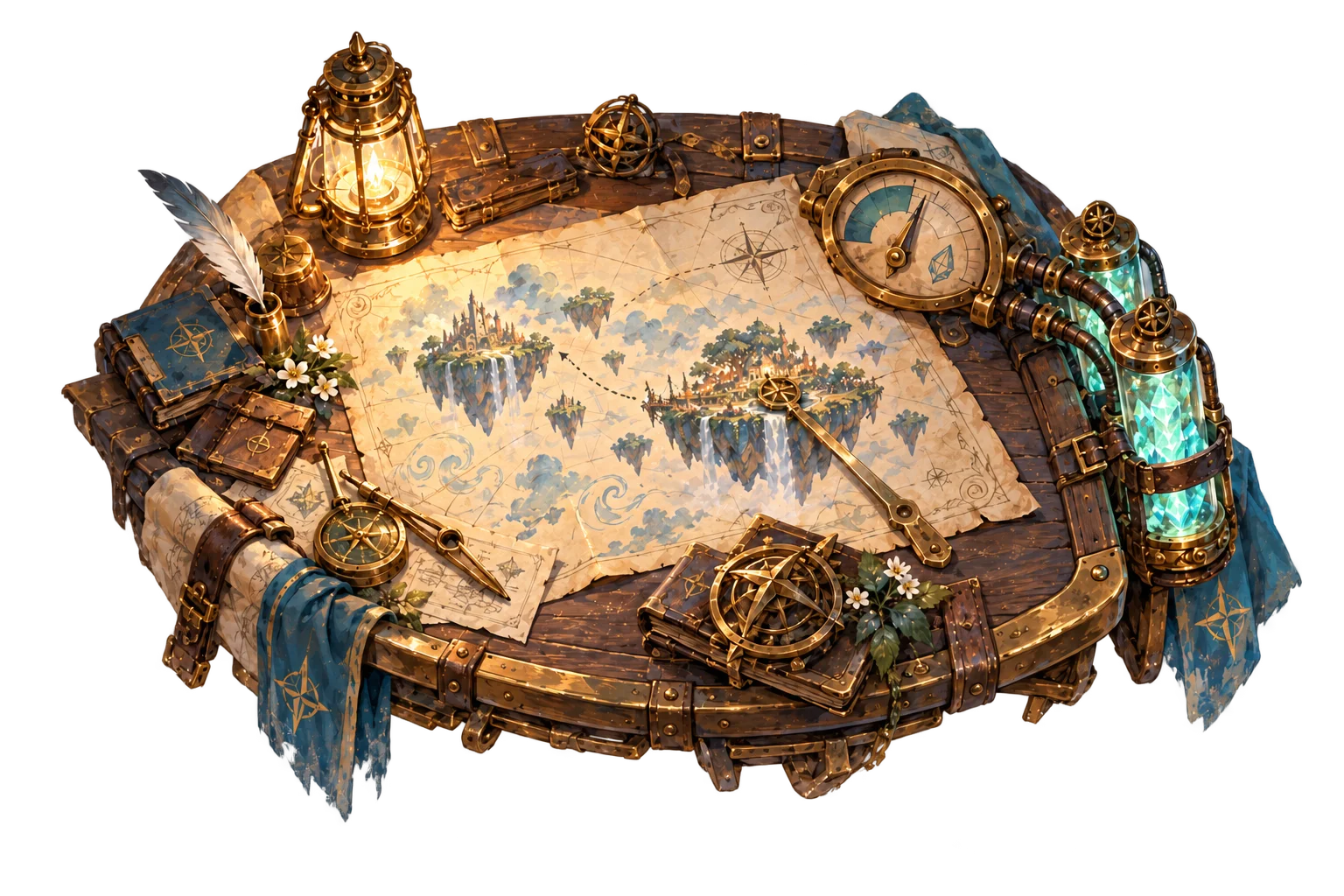
An interior study connects deck, cargo and workshop space within a modest flying home; the final layout remains open.
- 1The compass-star on the envelope is the game’s signature at any distance.
- 2The hold is on show. What you bring back has somewhere visible to go.
- 3Rooms open up as the crew grows. The ship is a record of who came aboard.
- 4Brass and wood, made by hand and repaired by hand.
Chapter 10 A home in the sky
More room means more you can bring home.
The airship connects the adventure’s parts. It carries you between regions, holds the resources you bring back and gives the people you meet a place in your journey. The first version starts with a weak ship linking two cities and their dungeons. Travel is a direct choice of destination, not a piloting minigame, and fuel gives each journey an economic cost. Random events along the way can come later.
The first upgrades players should care about are about capacity. Your personal pack limits what leaves a dungeon; the ship’s hold limits what moves between towns. Expanding the cargo room widens both the extraction loop and the trading loop, which is why the cargo screen should make capacity the easiest thing to read.
Early ship space holds one or two crew members and room for specialist workstations. As the ship grows, it can make space for more. A later helper that recovers more cargo is one idea for what a developed ship might automate. When you set out again, the ship should show that the last journey changed something.
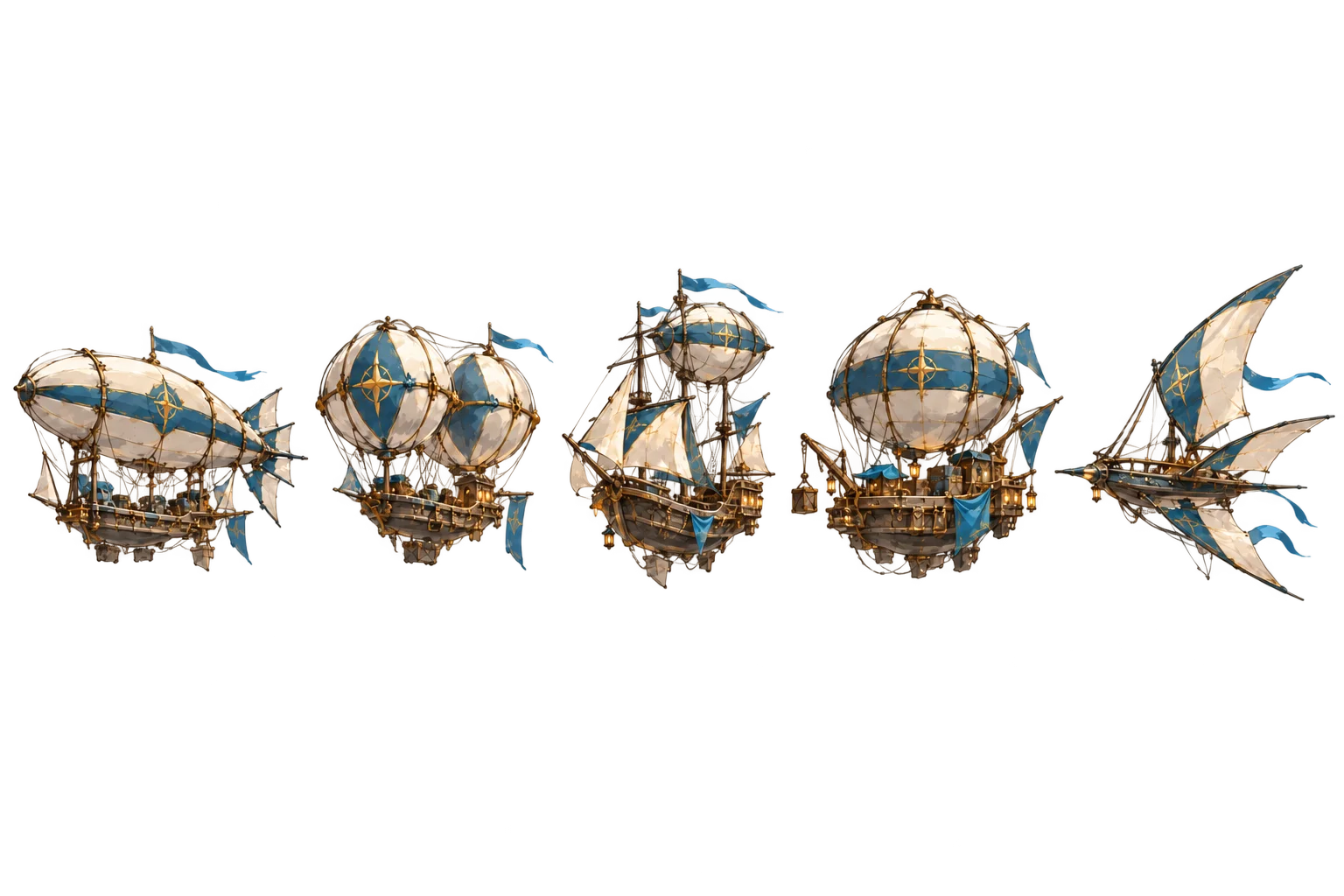
- A
- B
- C
- D
- E
Thumbnails first. We picked the one that still read as home at a hundred meters.
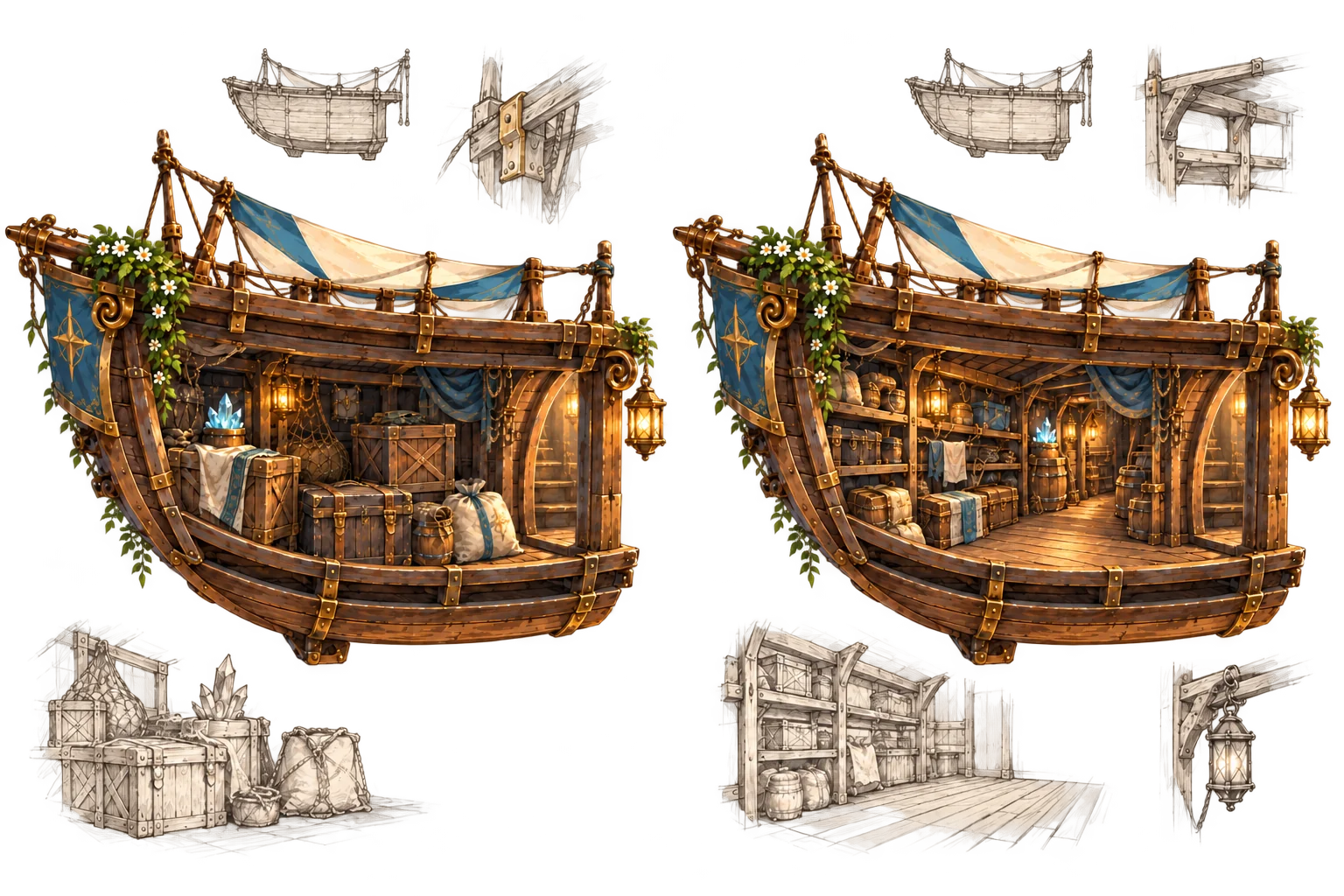
- First hold
- Expanded hold
More room means more you can bring home, and more to trade.
Plate 11
A new face, a new possibility
The first crafting service becomes a human connection: someone aboard who helps turn a discovery into progress.
Chapter 11 People & belonging
Make room for someone, and they bring their craft.
The first person you rescue unlocks crafting, and crafting is now central to the whole game. It is how extracted materials become higher starting levels, evolution items and other long-term power. Without it, a successful run is just a full bag. With it, a run becomes a stronger beginning.
Specialists need somewhere to work. A crafter, artificer or armor forger joins when the ship has space and the right station for their role. Building that room is part of inviting them. Crew management stays light: their services lean passive, so the ship feels more capable without becoming a management game.
Crew members can have histories with particular ports and ties to people there. For now those relationships are mostly flavor, with room for deeper effects later. Companions contribute a different kind of attachment. Bond capacity grows slowly, and the last slots should be major achievements. Finding a rare companion when your bonds are full should force a real choice. Physical habitats are deferred; bond capacity is enough for now.
A ship feels lived in before it looks it.
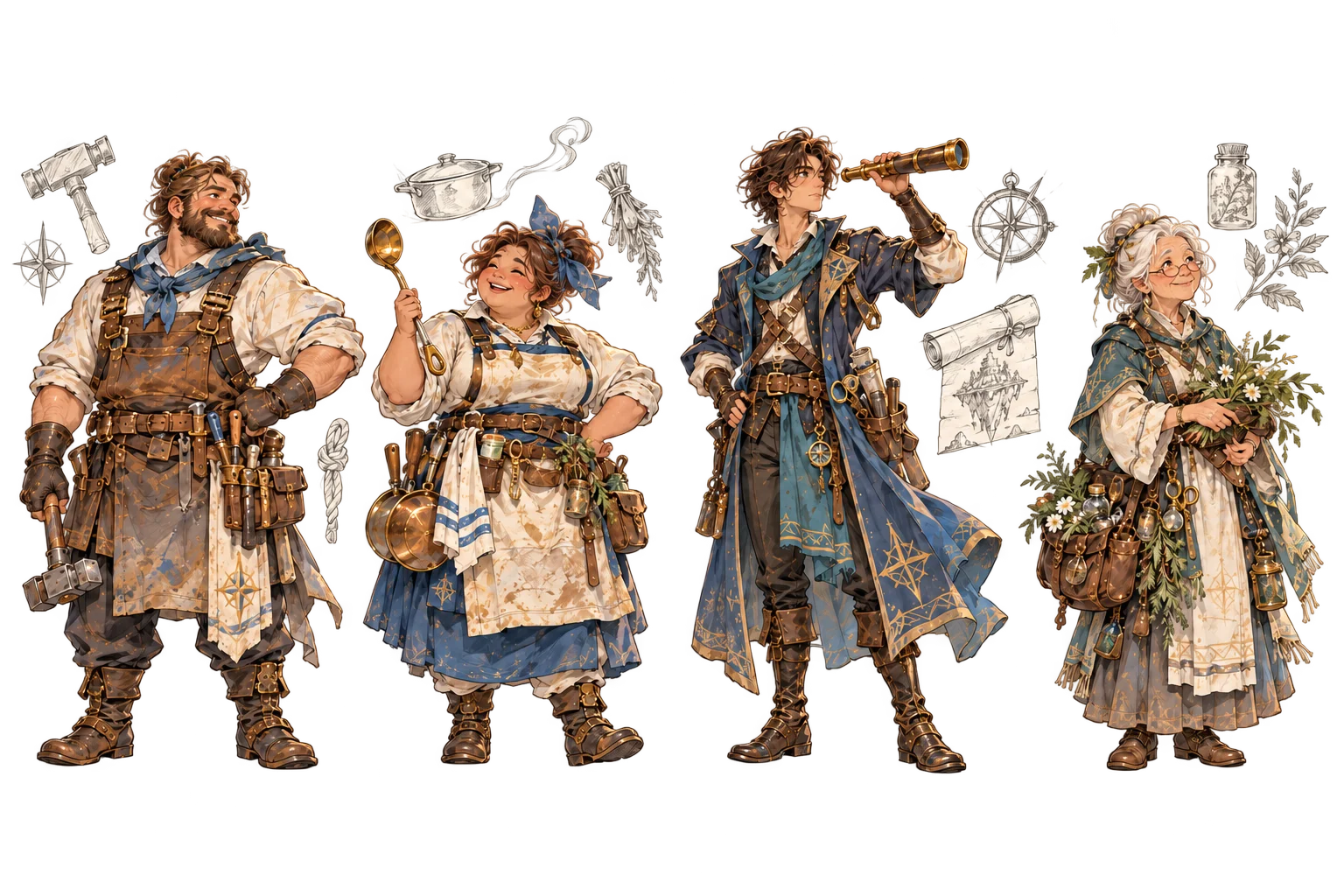
- Shipwright
- Cook
- Navigator
- Herbalist
Readable by shape alone. Each should bring a room to the ship.
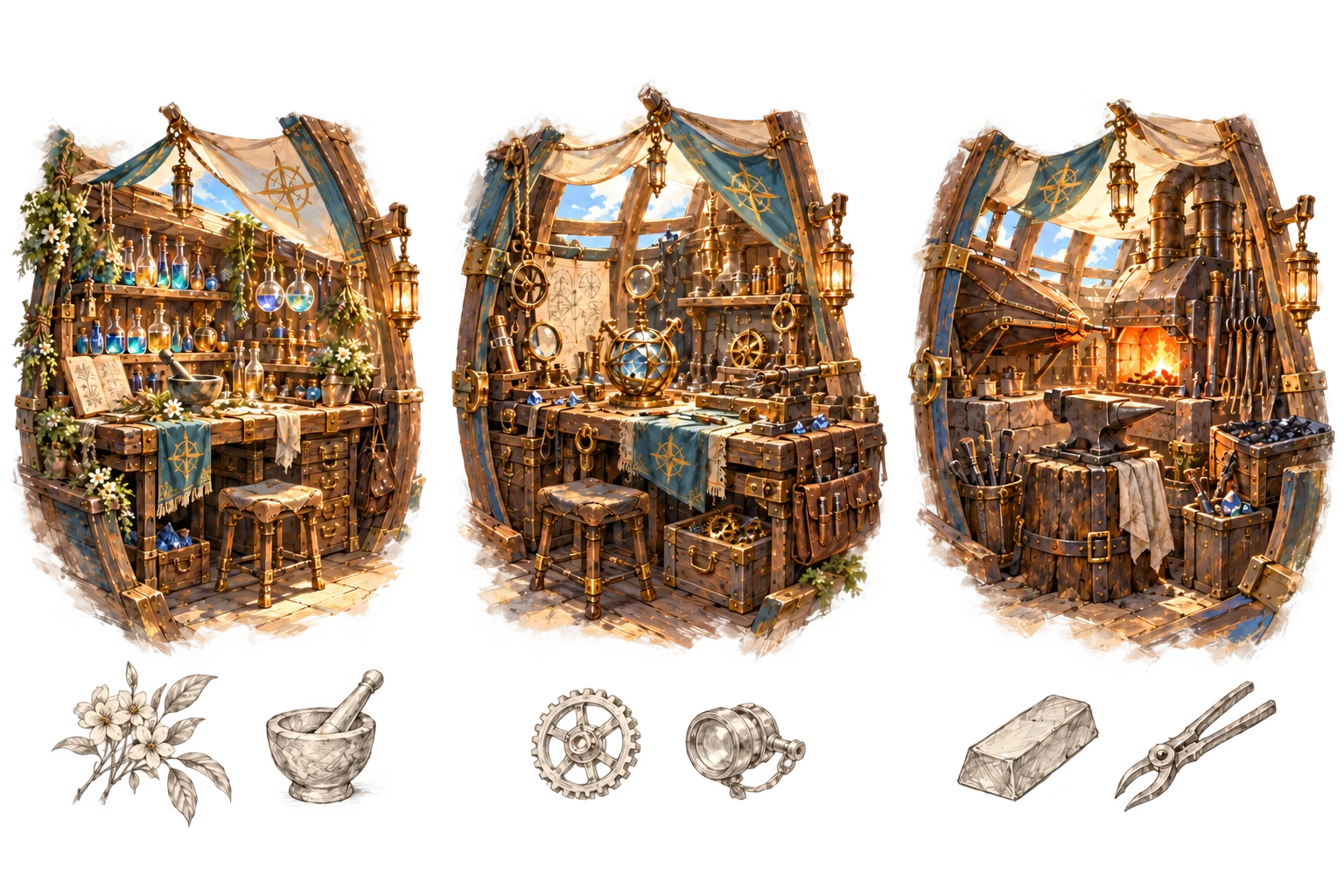
- Crafter's bench
- Artificer's bench
- Armor forge
Build the room, and a specialist can come aboard.
Plate 12
A discovery finds a new value
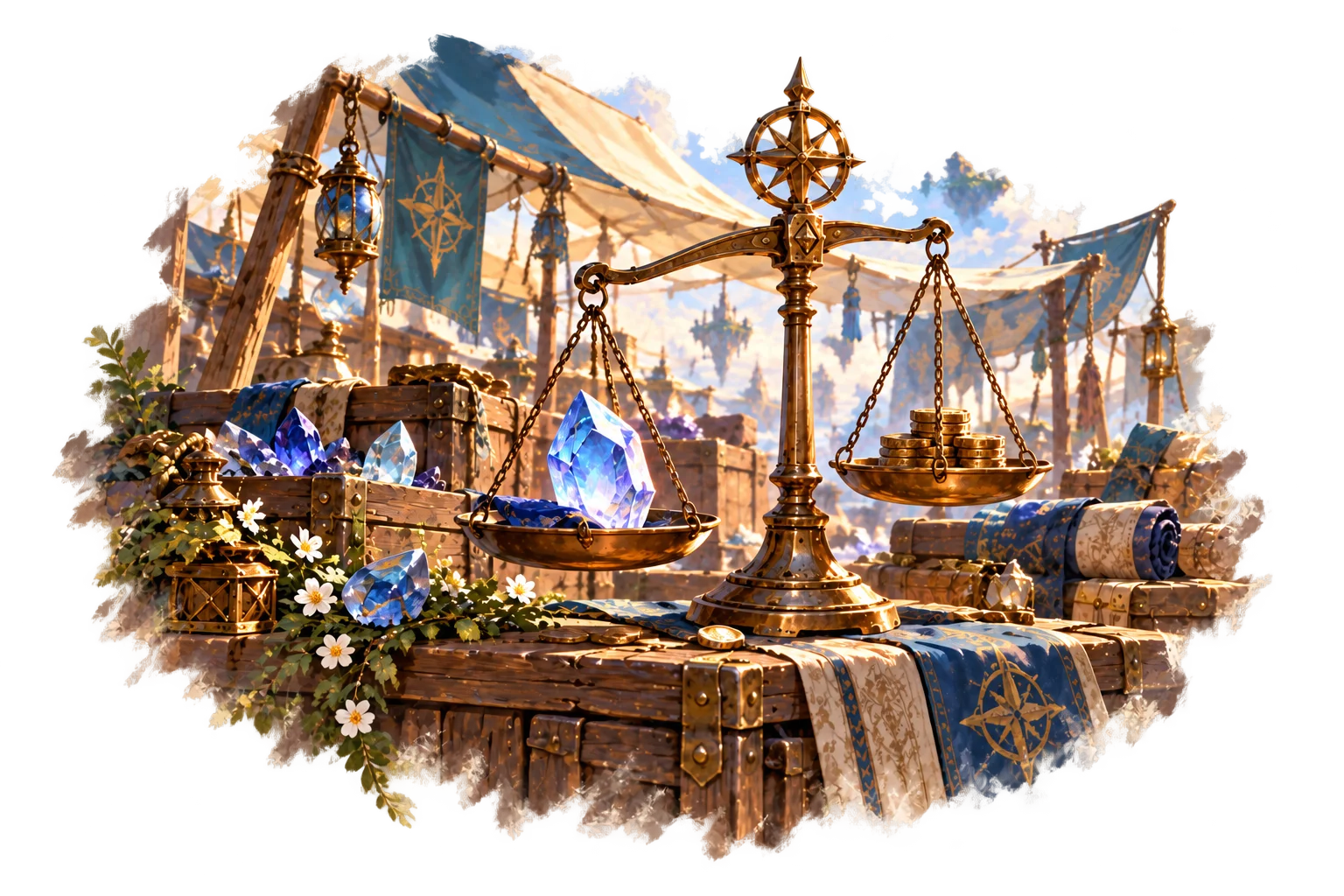
Goods arriving from another island connect the cargo hold to the life and opportunities of a port.
Chapter 12 Ports, markets & cargo
A discovery here can be an opportunity somewhere else.
Loot has a life beyond the dungeon where it was found. If a town sits beside a leaf dungeon, leaf materials are plentiful there and sell for little. Carried across the kingdom to a place where they are scarce, the same goods are worth more. Prices follow a learnable regional pattern with some movement from events and rotating stock, so knowledge of the world becomes part of progression.
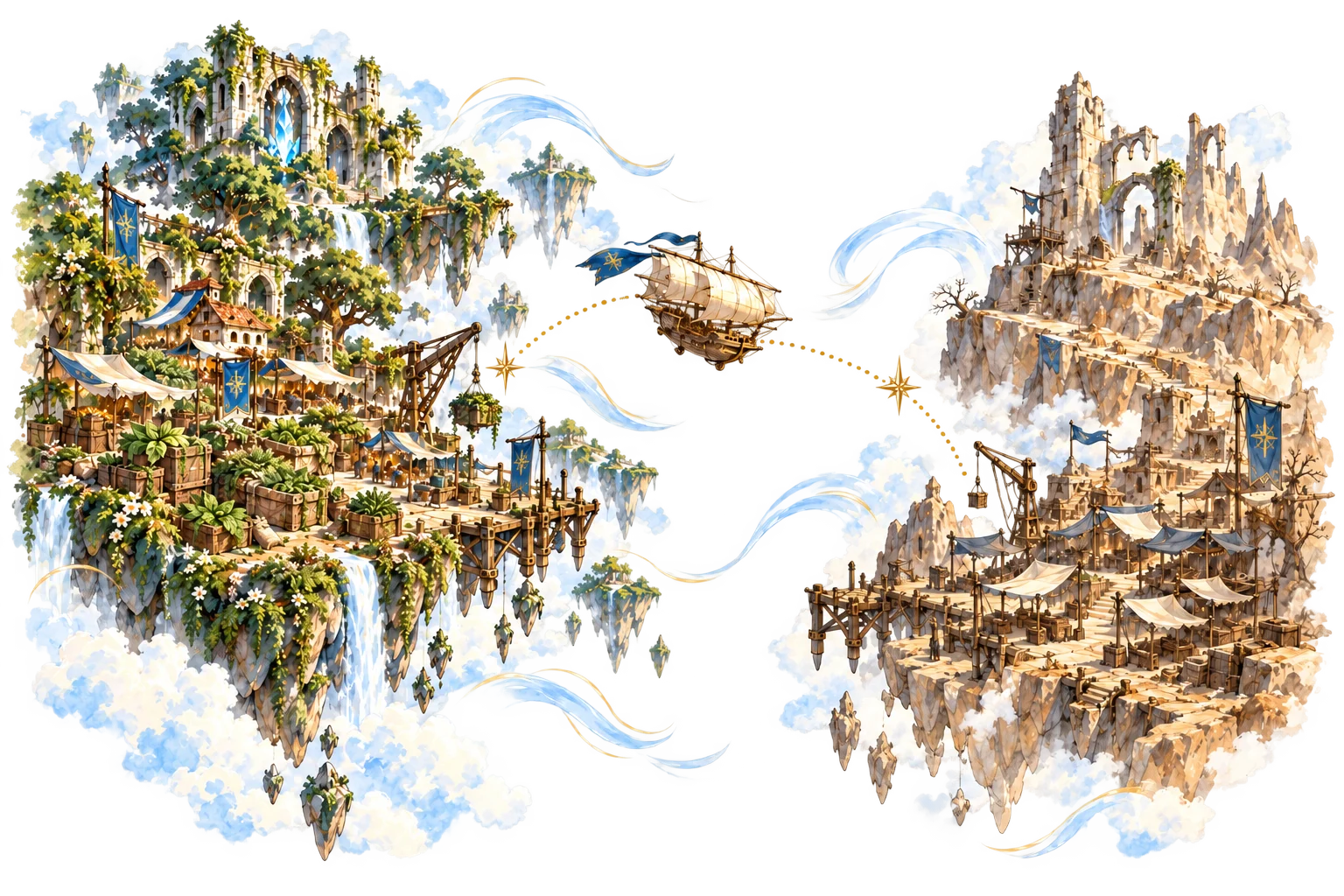
Towns are a pillar of the game, not a loading screen between dungeons. You can sell, craft, resupply and leave quickly, or spend a longer session trading, talking with people and pursuing town progression. In the first version, towns are told apart by their shops, services and outposts rather than by deep simulation. The first town needs a quest that sends you into a dungeon; the second needs someone who can help you bond a companion.
Capacity is the strongest limit on a profitable trip. Neither you nor your ship can carry everything a valuable dungeon offers, so repeated runs and upgrades matter. Quests that advance your character or your ship feel especially worthwhile, and delivery contracts are a welcome idea for later. Faction reputation stays simple in the first version.
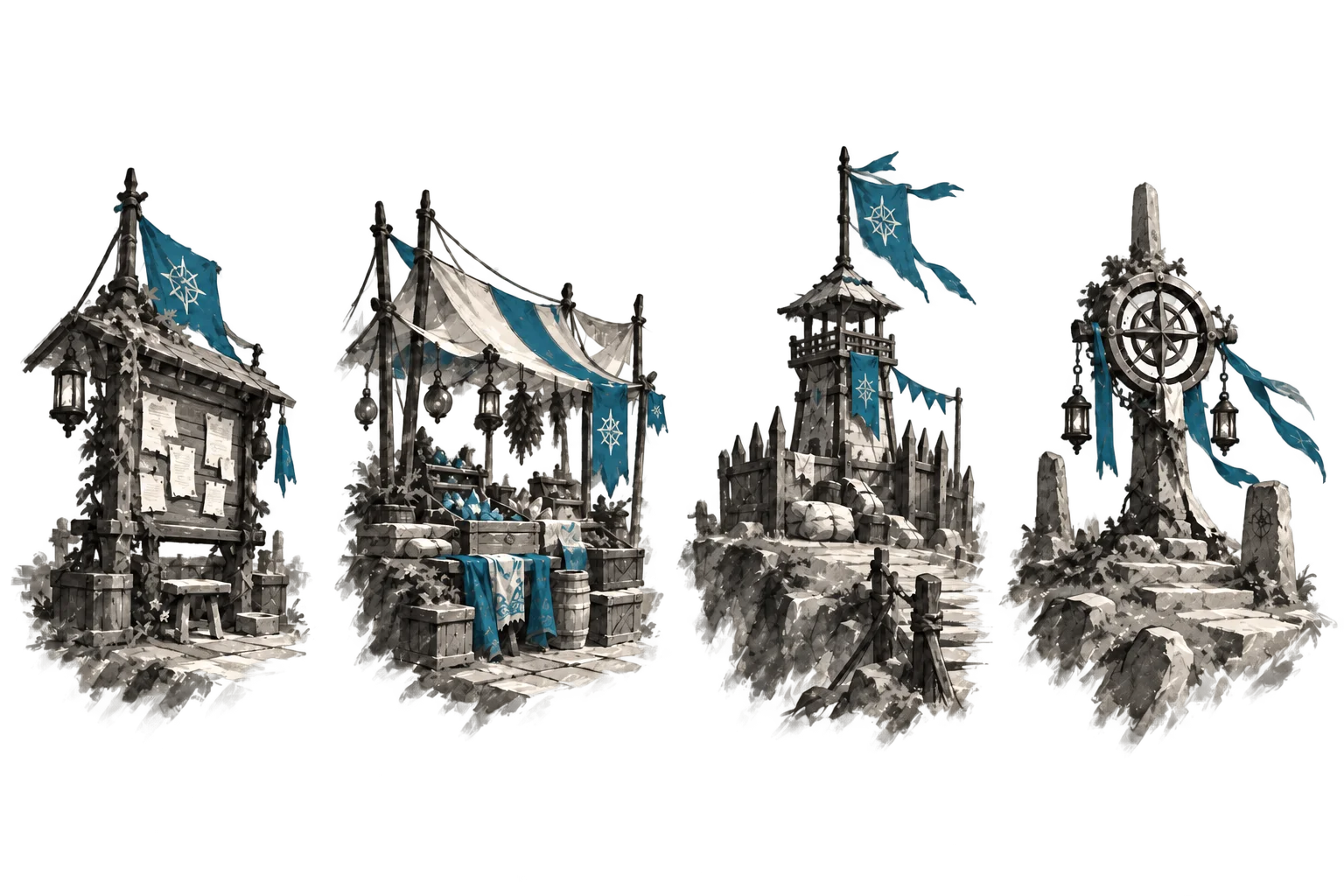
- Quest board
- Market
- Outpost
- Bonding shrine
Told apart by shops, services and outposts, not deep simulation.
Act IV
The Whole Voyage
How it all loops, what we build first, and why.
How it fits together · The first playable world · Built in the open
Plate 13
Bring the journey back with you
Recovered cargo, a waiting crew and a familiar deck turn the end of one expedition into the beginning of another.
Chapter 13 How it fits together
Every return creates the next reason to leave.
Taken together, these systems describe a rhythm. You choose a dungeon for what it might give you, choose the stakes, and perhaps push it harder than before. The run offers quick powers, new pressures and materials to pursue. As your pack fills, returning begins to compete with the chance of finding more. What you bring home moves through crafting, companion growth, the ship or a distant market, and the next run starts from a stronger floor.
A player chasing an evolution ingredient may learn one dungeon and juice it deliberately. Someone training a new companion may revisit easier places. Another may carry leaf materials across the kingdom. These are examples of connections the design should support, not a fixed itinerary.
That rhythm is also the test for every system we add. If a system’s complexity starts distracting from the enjoyable core, it gets simpler or it goes. One representative interaction that proves the idea is better than a complete ecosystem nobody asked for.
Town, dungeon, port, home, and around again.
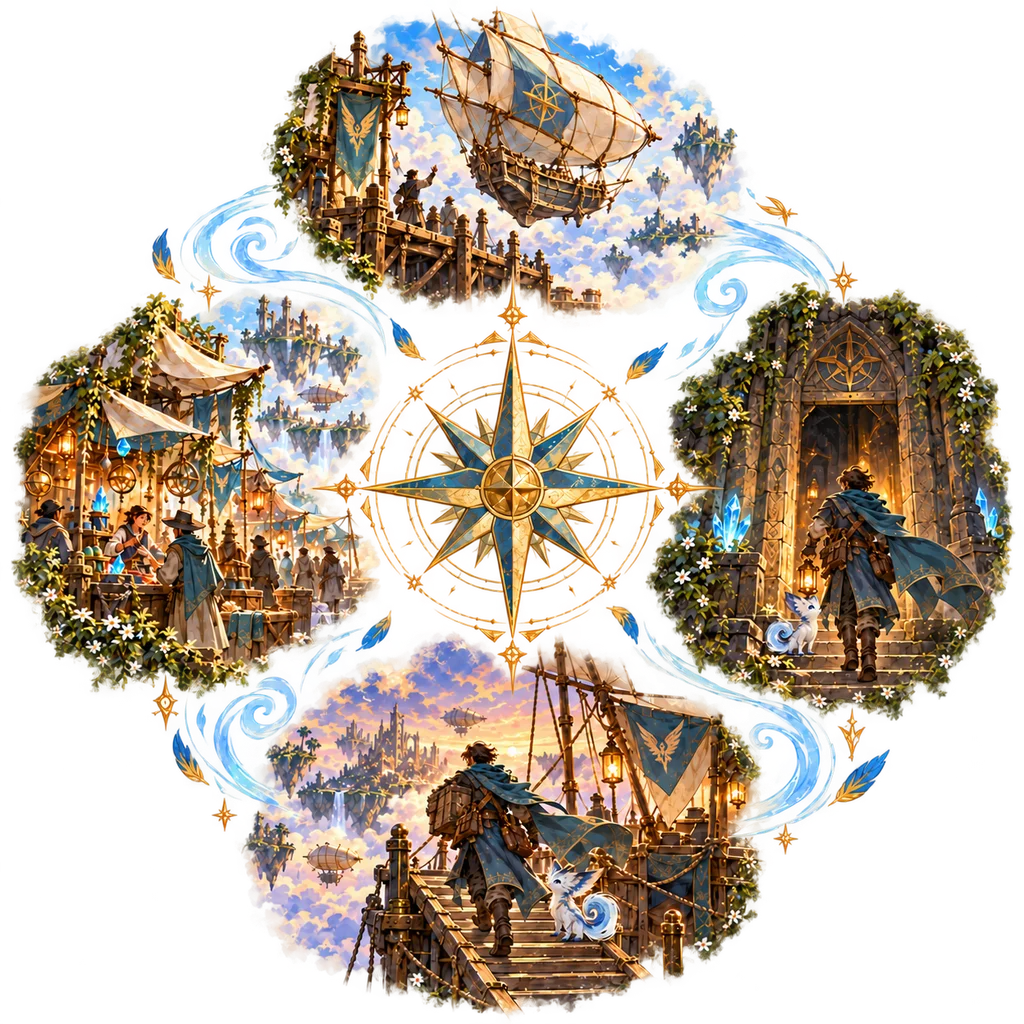
- Set out
- Delve
- Return
- Trade
Four scenes, one loop. Every return creates the next reason to leave.
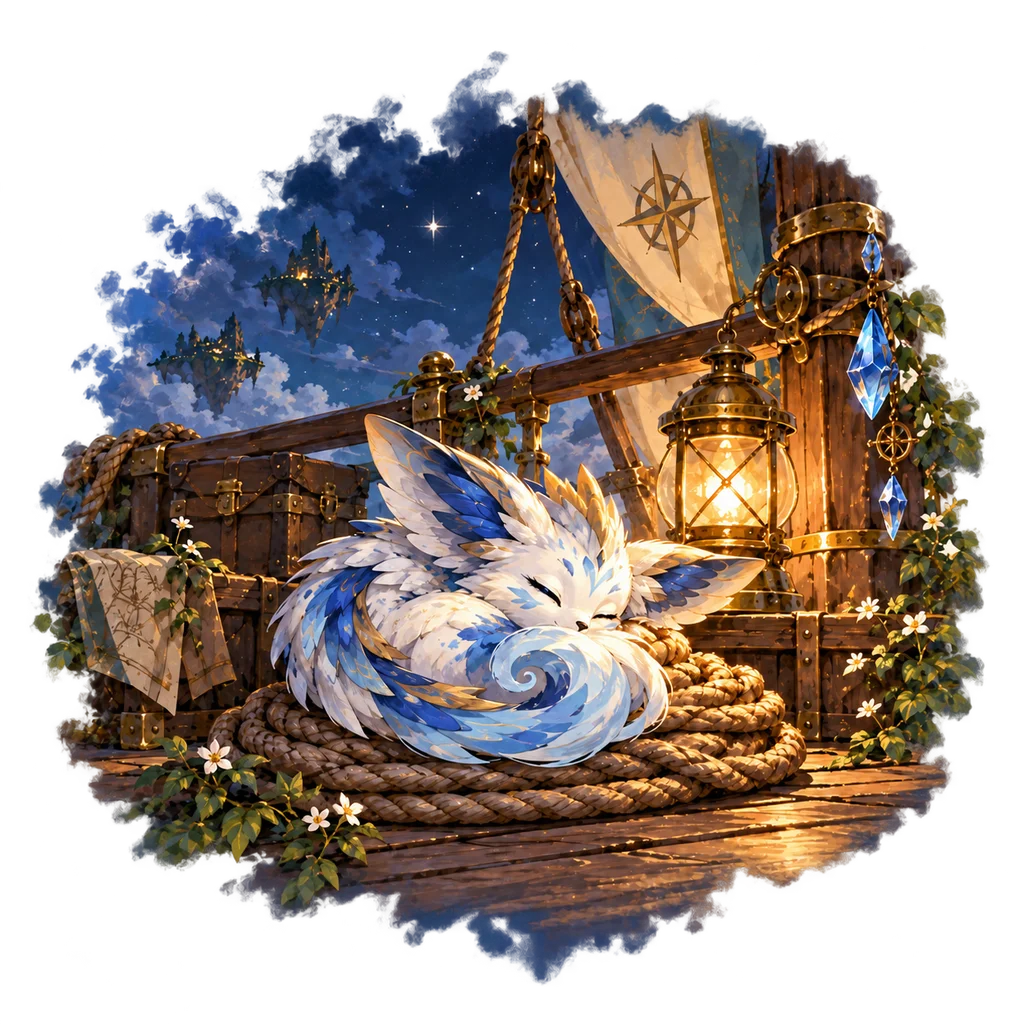
Plate 14
Two cities. Two dungeons. A connected beginning.
An illustrative world study keeps the first scope legible: two ports, two dungeon destinations and the airship between them.
Chapter 14 The first playable world
Prove the connections in a world we can finish.
The first version is deliberately bounded: two cities, two dungeons, an airship connecting them, authored maps, and a companion system that begins with one partnership. The main screens need meaningful connections. Buying something in a city should affect cargo. Character and companion growth should work. Ship spaces should lead to crew conversations and make empty rooms visible.
Galespun is being built in Godot, on the Mac first, as a single-player game. Controller feel guides combat, and Steam is the intended home. Steam Deck and Switch are later destinations; mobile is only a possibility. The vertical slice ends with a bonded companion. The full game can reach a clean credits moment and then continue into an endless post-credits mode.
The current release direction is a premium purchase with no pay-for-power, with the creator’s own community able to play for free. Supporter packs may be acceptable if they never sell power. Mods and player-made dungeons are an interesting eventual possibility, intentionally deferred until well after release.
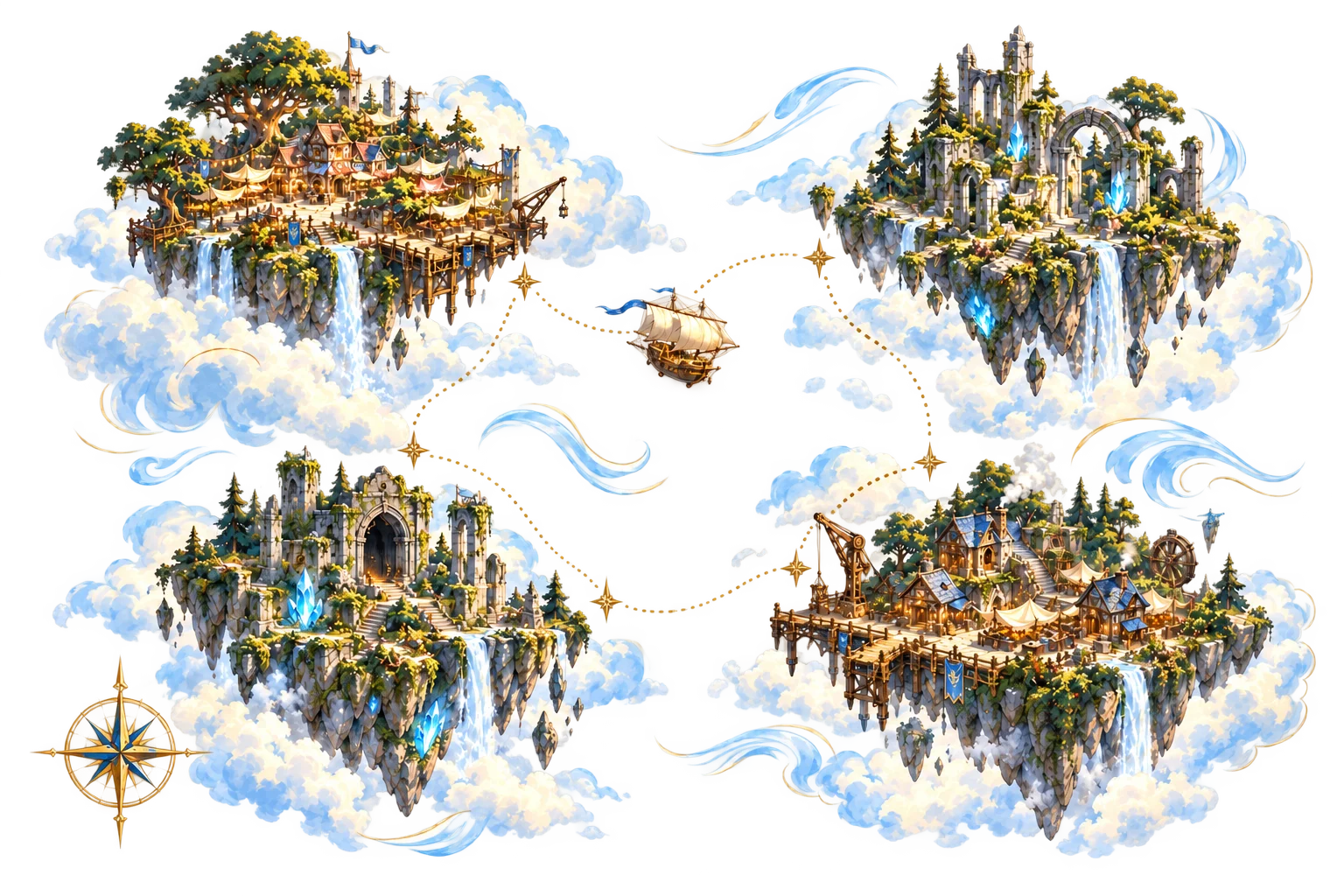
- Port one
- Port two
- First ruin
- Second ruin
Small on purpose. Two ports, two dungeons, one ship, and every connection between them.

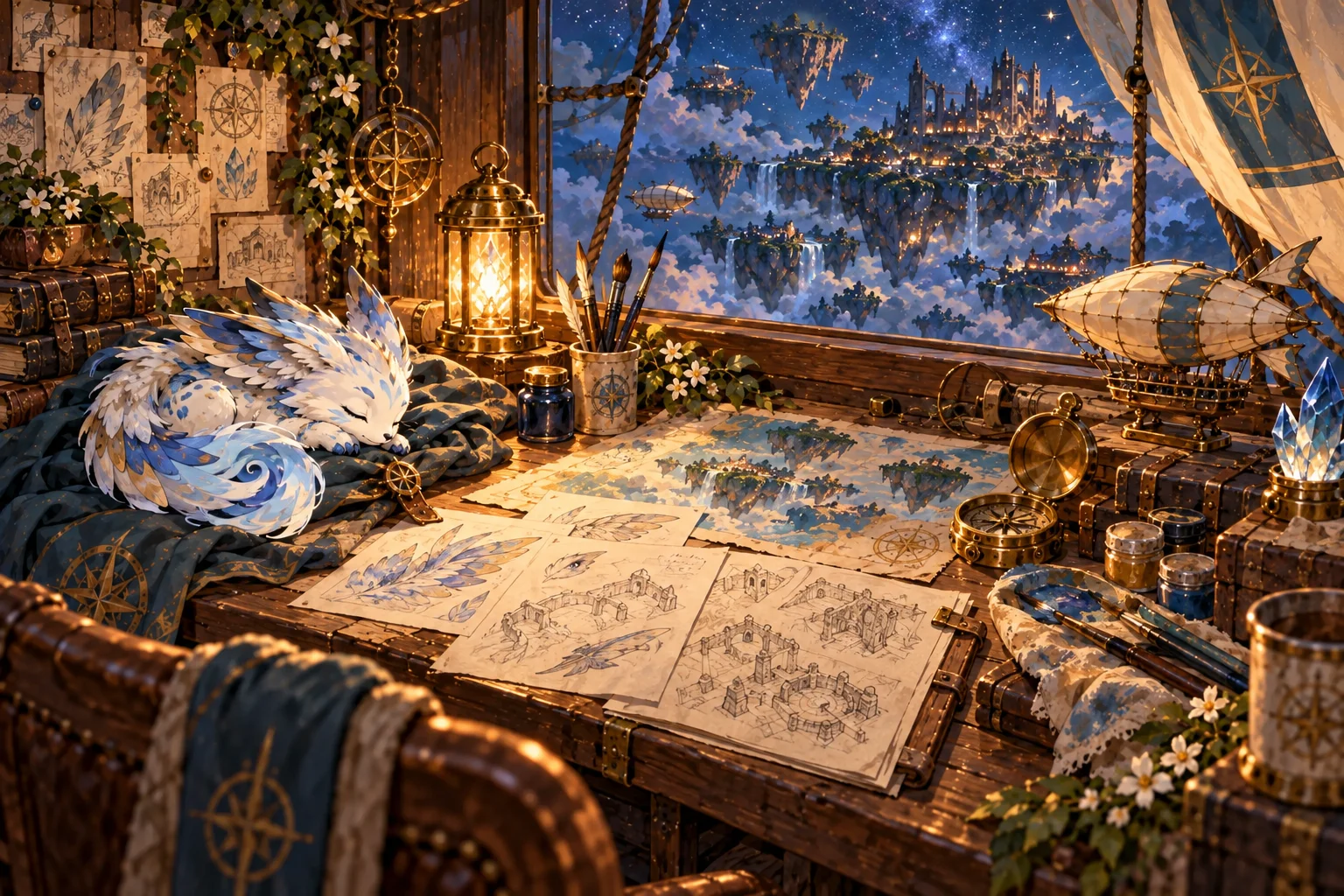
Plate 15 · New in Edition 3
A world in the making
Built in the open, one small playable piece at a time.
Chapter 15 Built in the open
Learn by making a real game, then share what we learn.
Galespun has a second purpose beside being a good game. It is a way to learn game development by building something real, then share what it teaches with the wider community. The project should stay interesting enough that its creator keeps learning, and frequent visible updates help the community follow along.
Playtests are small and frequent: short sessions, and longer ones of about thirty minutes. Afterward, the questions are simple: What was fun? What wasn’t? What did you like? What didn’t you like? What do you want to see?
The most important evidence is what players do. Are they visibly having fun? Do they want to keep going, and do they want to come back? Interest in sharing clips is a welcome secondary signal, never a substitute. Feedback can stay outside the game, and analytics are not needed on day one. AI tools, including Codex and Claude, are part of how the game is made, and the animation and asset pipeline is expected to be one of the biggest things to learn.
“I want to go back
to this world.”
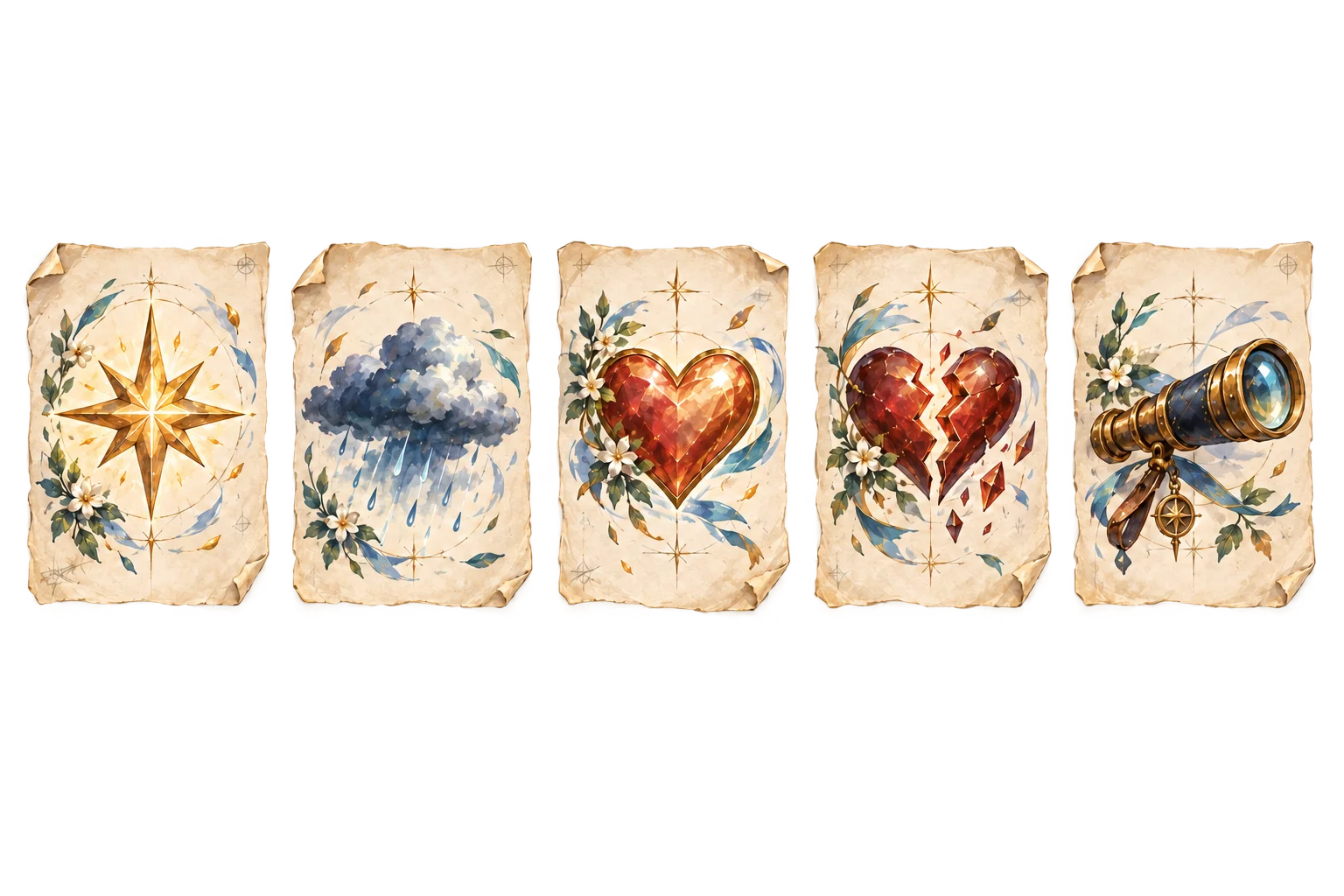
- Fun
- Not fun
- Liked
- Didn't like
- Want to see
What was fun? What wasn't? What did you like? What didn't you like? What do you want to see?